# After Khamenei: How Iran's Leadership Crisis is Reshaping the Middle East
**March 13, 2026**
The assassination of Supreme Leader Ayatollah Ali Khamenei in early March 2026 was the tremor that unleashed a political earthquake across the Middle East. For decades, the region's geopolitics were shaped by the careful, if often hostile, calculations surrounding the Islamic Republic's aging patriarch. His sudden removal from the board has not created a simple power vacuum; it has unleashed a succession crisis that has installed a new, more volatile leadership in Tehran and pushed the region to the brink of a full-scale war. The immediate aftermath has seen a dynastic power grab, a chokehold on the world's most critical oil artery, and a global economy teetering under the weight of a severe energy crisis. The death of one man has ignited a firestorm, and the world is now scrambling to contain the flames.
## The Operation and Its Immediate Aftermath
While the precise details of the operation that led to Ali Khamenei's death remain shrouded in the fog of intelligence warfare, its impact was immediate and seismic. The event triggered a pre-planned, yet highly controversial, succession process. Within days, Iran's Assembly of Experts, the clerical body constitutionally responsible for selecting the Supreme Leader, convened. The atmosphere in Tehran was thick with tension, a mix of shock, grief among loyalists, and quiet anticipation among the regime's many opponents.
The immediate aftermath was not one of collapse, but of a swift, forceful consolidation of power. The state apparatus, particularly the powerful Islamic Revolutionary Guard Corps (IRGC), moved quickly to manage the transition and suppress any potential for widespread unrest. The choice for the next leader, long speculated upon in Western intelligence circles, was announced with a speed that suggested the decision had been made long before Khamenei's demise. The era of Ali Khamenei was over, and the era of his son, Mojtaba, had begun with a declaration of continuity and defiance.
## Succession and Revenge: The Rise of Mojtaba Khamenei
The appointment of Mojtaba Khamenei as Iran's third Supreme Leader is a watershed moment for the Islamic Republic. It marks the first father-to-son transfer of power since the 1979 revolution, a move that critics argue transforms the republic into a de facto monarchy, the very system the revolution overthrew. Mojtaba, born in 1969, has never held an elected office, building his power base from the shadows of his father's office, or *beit*. U.S. diplomatic cables once described him as "the power behind the robes," a testament to his long-standing influence.
His rise was not without controversy. The Iranian constitution requires the Supreme Leader to be a senior Shia scholar, a *mujtahid*. Mojtaba holds the lower clerical rank of *hojjatoleslam*, a point of contention that was seemingly bulldozed by the immense political will of the IRGC, which reportedly pressured the Assembly of Experts to secure his election. Having served in the IRGC during the Iran-Iraq War, Mojtaba has cultivated a deep loyalty structure within the security apparatus. He is also blamed by reformists for his role in the brutal suppression of the 2009 Green Movement protests, where he allegedly took command of the Basij paramilitary force.
His ascension was met with a mix of orchestrated support and genuine public anger. While state institutions and military commanders quickly pledged allegiance, and allies like Yemen's Houthi rebels welcomed his appointment, chants of "Death to Mojtaba" were reported on the streets. Many Iranians fear he will be "even more oppressive than his dad." Mojtaba, a hardliner known to be more favorable to developing a nuclear weapon than his father, has signaled that his rule will be defined not by conciliation, but by confrontation.
## Regional Escalation: The Strait of Hormuz Becomes a Battlefield
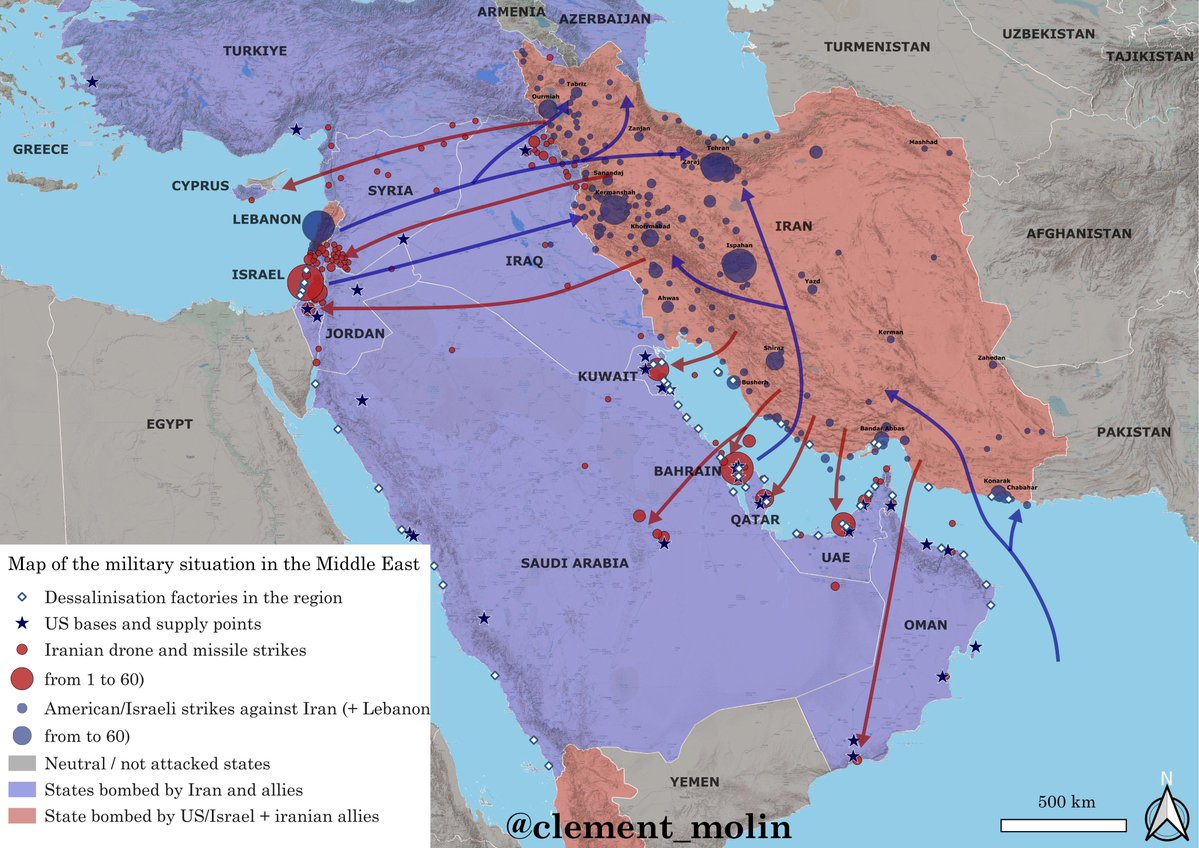
Mojtaba Khamenei's first major act as Supreme Leader was to turn the region's most critical waterway into a weapon. In a direct challenge to the United States and its regional allies, Iran has begun a campaign of attacks on commercial shipping in the Strait of Hormuz, the narrow channel through which approximately 20% of the world's crude oil and liquefied natural gas (LNG) passes daily.
The new Supreme Leader has declared that the strait will remain a "tool to pressure the enemy," effectively holding a significant portion of the global energy supply hostage. Projectiles have struck cargo vessels, forcing crews to evacuate, and the U.S. military has responded by destroying Iranian minelaying ships in an effort to keep the waterway open. The IRGC's naval forces are actively disrupting traffic, creating a de facto blockade that has sent shockwaves through global markets. Top Middle East producers like Saudi Arabia, Iraq, and Kuwait have been forced to slash production as their storage facilities fill to capacity, unable to load oil onto tankers. The Persian Gulf has transformed from a commercial superhighway into a contested battlespace, with each passing day raising the risk of a direct military clash.
## The Global Energy Crisis
The chaos in the Strait of Hormuz has triggered the most significant global energy crisis in recent memory. The price of international Brent crude has surged past $100 a barrel, with some analysts forecasting a catastrophic spike to $200 if the strait is fully closed. The International Energy Agency (IEA) has described the situation as the "largest supply disruption" in history. The economic fallout extends far beyond the gas pump, fueling global inflation and threatening to push major oil-importing nations into a deep recession.
The disruption ripples through nearly every sector of the global economy. Aluminum prices are climbing, threatening costs for the automotive and aerospace industries. Fertilizer shipments, a third of which transit the strait, are being blocked, with urea prices soaring and portending severe food inflation. The petrochemicals that form the basis for plastics, synthetic fabrics, and pharmaceuticals are caught in the backlog, creating supply chain stress for everything from consumer goods to the Asian garment industry. Even with new maritime insurance measures, the sharply rising rates are passed on to consumers, adding another layer of inflationary pressure. In response, the IEA's 32 member countries have authorized a coordinated release of 400 million barrels of oil from emergency reserves—the largest such drawdown in the agency's history. The U.S. has supplemented this by releasing 172 million barrels from its own Strategic Petroleum Reserve (SPR), a desperate measure to temper prices and provide a temporary buffer against a full-blown economic catastrophe.
## International Response
The international community's response has been a frantic mix of economic damage control and military posturing. The coordinated release of strategic oil reserves by the IEA and the U.S. is a clear signal of the economic panic gripping Western capitals. These releases are seen as a "painkiller, not a cure," designed to buy time and moderate prices while a diplomatic or military solution is sought.
On the military front, the U.S. has taken direct action against Iranian naval assets in the Gulf, signaling its determination to enforce freedom of navigation. However, the risks of escalation are immense. Israel's defense minister, Israel Katz, has issued a stark warning, stating that Mojtaba Khamenei is "an unequivocal target for elimination," raising the specter of further assassinations. Meanwhile, Saudi Arabia's state oil giant, Aramco, has warned of "catastrophic consequences" for global markets if the conflict continues to choke its exports. The crisis has laid bare the world's dependence on a handful of volatile sea lanes and the limited options available when a determined actor decides to disrupt them.
## Conclusion: A More Dangerous Middle East
The death of Ali Khamenei has not ushered in an era of reform or moderation in Iran. Instead, it has accelerated the rise of a more radical, aggressive, and dynastic regime under his son, Mojtaba. The new Supreme Leader has wasted no time in demonstrating his willingness to use economic warfare as a primary tool of statecraft, weaponizing the Strait of Hormuz and plunging the global economy into crisis. The path forward is fraught with peril. The immediate challenge is to restore the flow of energy and stabilize markets without triggering a wider war in the Persian Gulf. Yet, with a hardline leader in Tehran seeking to avenge his father and solidify his rule through confrontation, and with regional and global powers drawing hard lines in the sand, the potential for miscalculation is terrifyingly high. The Middle East has been reshaped in a matter of weeks, and the new landscape is more dangerous and unpredictable than ever.


