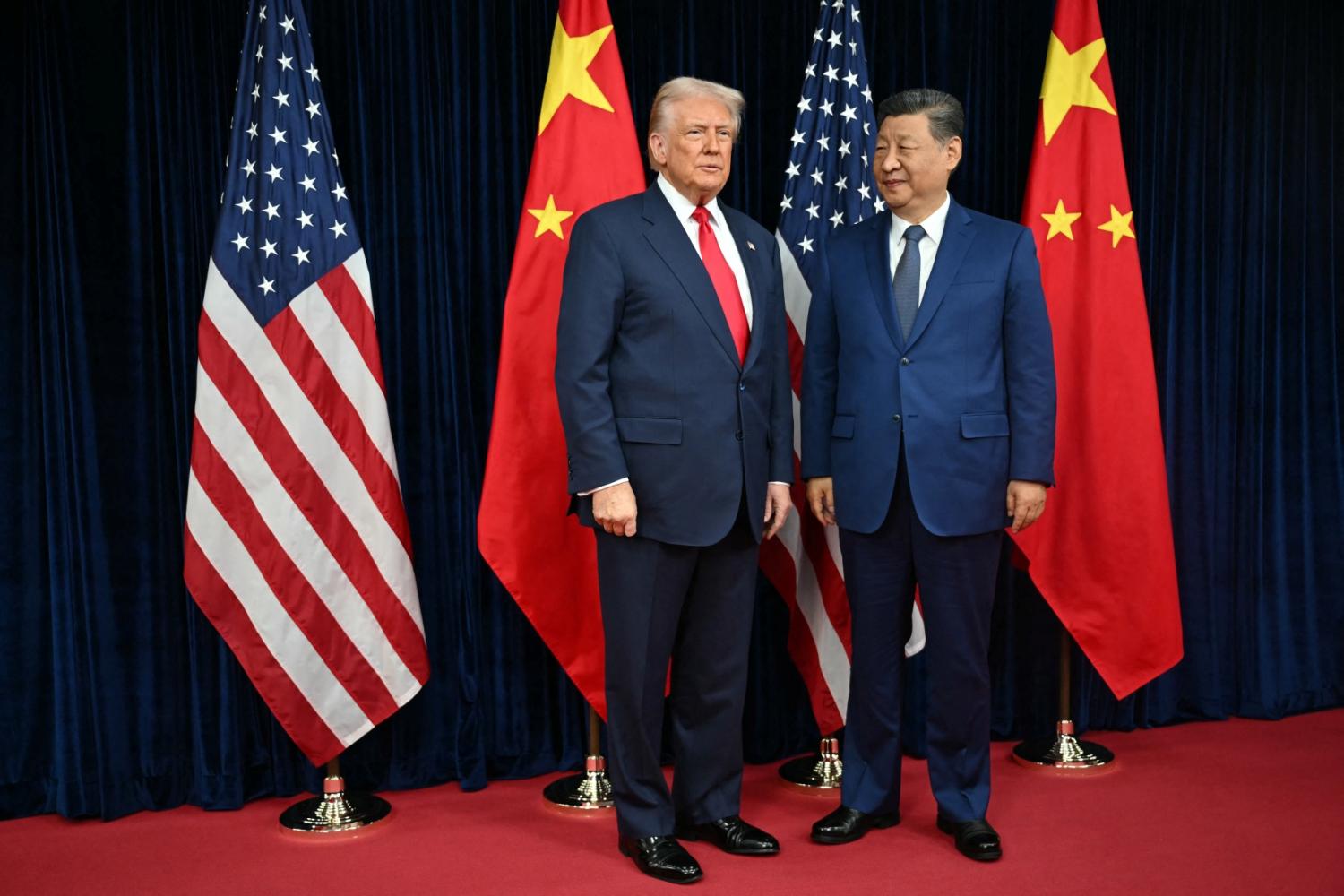
# Beijing Summit Ends with Ambitious Rhetoric but Few Concrete Gains
The highly anticipated May 2026 summit between U.S. President Donald Trump and Chinese President Xi Jinping in Beijing has concluded, leaving observers with a familiar mix of warm personal rhetoric and a scarcity of substantive breakthroughs. Over two days of talks on May 14 and 15, the leaders sought to navigate a relationship fraught with economic tension and geopolitical rivalry. While the summit succeeded in maintaining a fragile stability, it also underscored the deep-seated disagreements and divergent strategic goals that define the world’s most important bilateral relationship.
President Trump emerged from the meetings characterizing them as "very successful," emphasizing his personal bond with President Xi. However, the outcomes were more aspirational than concrete, with Chinese officials offering measured statements and declining to confirm several of the agreements touted by the White House. The discussions ultimately highlighted a confident China, willing to engage but not concede on core interests, and a U.S. administration focused on securing transactional wins ahead of domestic political milestones.
## The Agenda: Divergent Priorities
Both Washington and Beijing approached the summit with distinct, and often conflicting, sets of objectives. For the Trump administration, the primary goals were tangible economic deliverables and demonstrated progress on key security issues. The U.S. sought significant Chinese commitments for purchasing American goods, particularly agricultural products, to bolster the economy ahead of the November midterm elections. Another key objective was to secure China's support for resolving the conflict with Iran and ensuring the reopening of the Strait of Hormuz.
China’s aims were more strategic and long-term. Beijing's foremost goal was to achieve greater stability and predictability in its relationship with Washington, especially regarding trade and tariffs. President Xi sought to lock in the fragile détente that had formed, using the high-level engagement to marginalize voices in the Trump administration advocating for a more confrontational stance. Furthermore, the summit served as a platform to underscore China's global stature, leveraging President Trump's first visit to Beijing in nearly nine years to project an image of resilience and parity with the U.S. . A central aspect of China's agenda was to press its case on Taiwan, seeking U.S. concessions on arms sales in exchange for a more stable relationship .
## Key Outcomes and Agreements
Despite optimistic declarations from the U.S. side, the summit was widely described by analysts as "heavier on symbolism than it was on substance" . The tangible outcomes were limited and, in some cases, uncorroborated by Beijing.
President Trump announced that China had agreed to purchase 200 Boeing jets and "billions of dollars" worth of American soybeans. However, a Chinese Foreign Ministry spokesperson stated that the details were still under discussion by working teams, and Boeing did not immediately confirm the sale . This discrepancy reflects a pattern where announced deals have not always materialized as promised .
A more structured outcome was the agreement to establish a "Board of Trade," a body of senior officials from both nations tasked with managing the economic relationship without reopening tariff negotiations . This mechanism is intended to oversee the implementation of purchase commitments and maintain the current trade truce.
Significantly, the summit did not produce a joint statement, a common feature of previous high-level diplomatic engagements, reflecting the persistent disagreements between the two powers. The official readouts from the White House and Beijing also showed notable divergences. While the U.S. statement mentioned discussions on curbing fentanyl precursor chemicals and Chinese investment in U.S. industries, these points were absent from China's summary of the talks .
## Points of Contention
While the summit aimed to stabilize relations, it also brought critical points of friction into sharp focus, most notably regarding Taiwan.
### Taiwan: A "Red Line" Taiwan emerged as the most sensitive issue. President Xi reportedly raised it as the first item on the agenda, issuing a stern warning that it remains the most critical issue in U.S.-China relations. He cautioned that if mishandled, the Taiwan issue "could collide or even come into conflict" . This "red line" declaration was reiterated by China’s Foreign Ministry, which also restated its opposition to U.S. arms sales to the island.
Conversely, President Trump revealed that, contrary to prior White House assurances, he and Xi discussed U.S. ties with Taiwan at length. He signaled a willingness to reconsider U.S. arms sales, a long-standing demand from Beijing, and indicated he was not necessarily bound by past U.S. commitments on the matter. This came as Trump had already delayed signing off on a pending $14 billion arms package for Taiwan, raising concerns that its security interests could be used as a bargaining chip .
### Cyber and Maritime Security Other areas of disagreement persisted. President Trump raised concerns about Chinese cyberattacks on U.S. infrastructure, a charge to which President Xi reportedly responded by noting that China is also a victim of such attacks .
While not a central topic of the summit itself, the South China Sea remains a primary flashpoint. A recent survey of experts identified the South China Sea as the most likely location for Chinese military escalation (43% of respondents), even ahead of the Taiwan Strait (33%). This assessment is partly based on the perception that a conflict there is less likely to escalate into a high-intensity war than a direct confrontation over Taiwan .
## Expert Analysis and Global Reactions
The consensus among foreign policy experts is that the summit served primarily as an exercise in risk management. Analysts from the Council on Foreign Relations (CFR) and the Center for Strategic and International Studies (CSIS) concluded that the meetings were more about stabilizing a tense relationship than fundamentally resolving its underlying conflicts .
The event prominently displayed China's growing confidence on the world stage. Compared to President Trump's 2017 visit, President Xi projected a sense of leadership on equal footing with the United States, proposing a "constructive China-U.S. relationship of strategic stability" . This framing suggests a desire for long-term strategic competition managed by guardrails, rather than a genuine partnership. This confidence is bolstered by China's strategic advantages, including its near-monopoly on rare earth mineral processing, a critical component for modern technology, which it has previously used as a negotiating tool .
Some analysts pointed to a "strategically muddled U.S. foreign policy" under Trump, where a personality-driven approach relying on personal rapport faces a Chinese leadership adept at leveraging such dynamics for its own strategic agenda . The lack of preparation—President Trump reportedly brought no China specialists in his delegation—further fueled this perception .
## The Future of US-China Relations
Looking beyond the summit, the trajectory of U.S.-China relations remains uncertain. A CSIS survey of experts reveals a deep division on what comes next: roughly one-third anticipate a more antagonistic relationship, one-third expect more cooperation, and one-third believe the status quo will persist .
Economic competition will remain central. The Busan trade truce, which has temporarily paused tariff escalations, is set to expire in November 2026, creating a potential deadline for renewed friction . China’s dominance in the rare earths supply chain gives it significant leverage, with a majority of experts believing its control will last for at least five more years .
Geopolitical flashpoints, particularly Taiwan, continue to pose the greatest risk. An overwhelming 77% of experts believe Beijing thinks it can pressure the U.S. into making concessions on its Taiwan policies. Meanwhile, 41% believe the risk of a U.S.-China military conflict over the island in the next three years is rising .
Finally, China continues to deepen its influence across the Global South, with experts predicting it will make the most gains in Africa and Southeast Asia. Parallel to this is growing concern in Washington about the alignment between China, Russia, Iran, and North Korea (dubbed "CRINK"), which many see as a considerable, if not formalized, challenge to U.S. interests .
## Conclusion
The May 2026 U.S.-China summit in Beijing ultimately succeeded in its most immediate goal: preventing a further deterioration in bilateral ties. The establishment of a "Board of Trade" and plans for continued high-level engagement through the end of the year provide mechanisms to manage ongoing friction. However, the summit also laid bare the profound and perhaps irreconcilable differences between the two powers. With unconfirmed trade deals, sharp warnings over Taiwan, and divergent strategic visions, the relationship is best described as one of managed competition. The fragile détente holds for now, but the fundamental sources of rivalry—technological, economic, and ideological—remain firmly in place, promising a future of continued contest and uncertainty.