# The Great AI Divide: How Competing Regulatory Models Are Reshaping Global Technology Order
**Date: 2026-03-10**
## Introduction: New Fault Lines in AI Governance
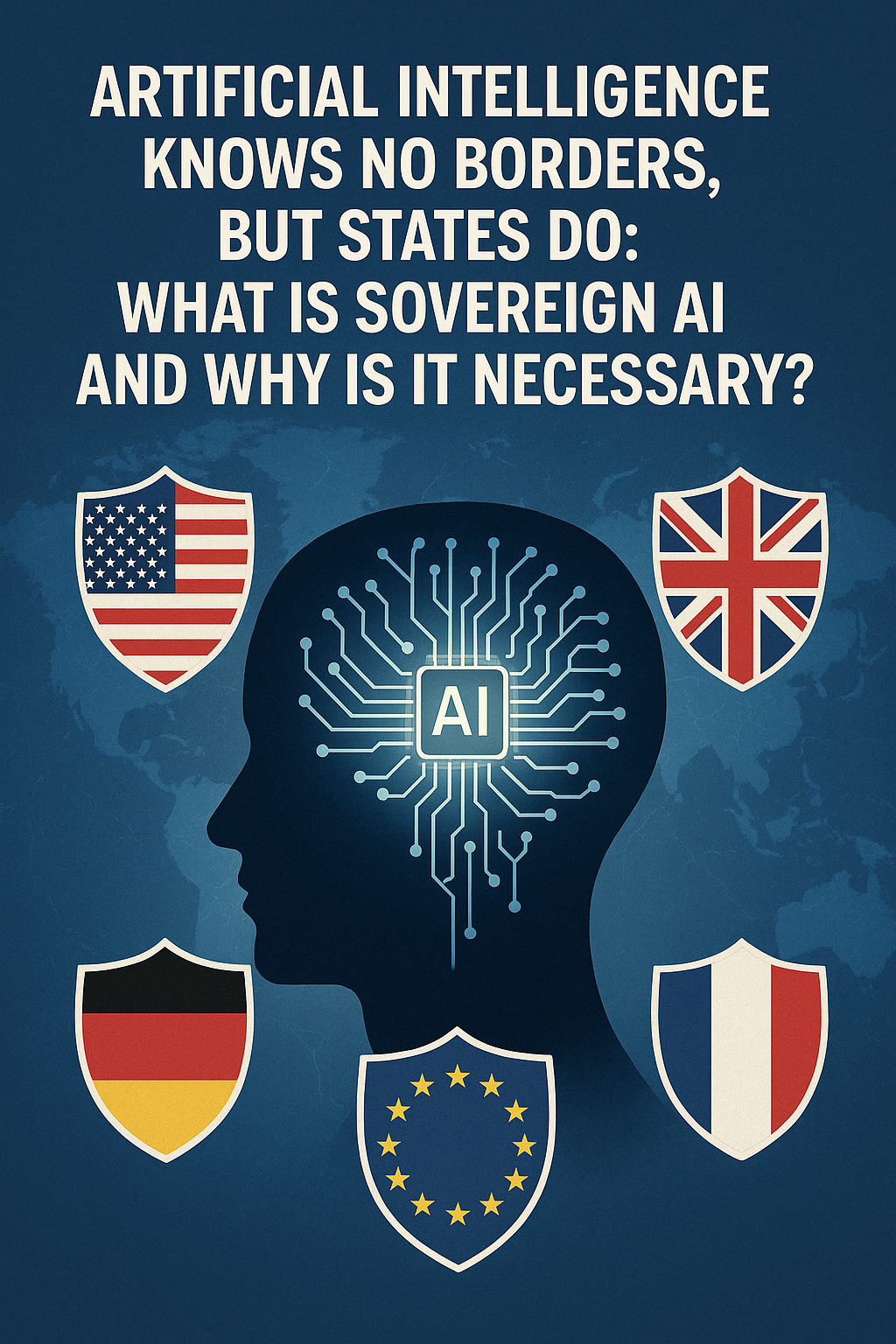
As artificial intelligence rapidly integrates into the fabric of the global economy and society, a new geopolitical fault line is emerging. The debate is no longer just about who can build the most powerful AI, but about who will write the rules that govern it. Nations and blocs are developing distinct regulatory frameworks that reflect their unique political values, economic priorities, and strategic ambitions. This divergence is creating a "Great AI Divide," fragmenting the digital world and reshaping the international technology order. The United States, the European Union, and China are pioneering three competing models, setting the stage for a complex future of regulatory competition, trade friction, and a global race for technological supremacy.
## The Three Models of AI Governance
The emerging global AI landscape is defined by three principal, and often conflicting, regulatory philosophies.
### The European Union: A Rights-Based Model
The European Union has established itself as a global standard-setter with its landmark AI Act, the world's first comprehensive legal framework for artificial intelligence. The EU's approach is fundamentally **rights-based and human-centric**, prioritizing the protection of fundamental rights, safety, and democratic values. The regulation employs a risk-based classification system:
* **Unacceptable Risk:** Practices that pose a clear threat to safety and rights are banned outright. This includes manipulative AI, social scoring by governments, and most uses of real-time remote biometric identification in public spaces for law enforcement. These prohibitions took effect in early 2025. * **High Risk:** AI systems used in critical sectors like infrastructure, employment, law enforcement, and access to essential services are subject to stringent requirements. These include rigorous risk assessments, high-quality data governance, human oversight, and robust cybersecurity before they can enter the market. * **Limited Risk:** Systems like chatbots must adhere to transparency obligations, ensuring users know they are interacting with an AI. AI-generated content, such as deepfakes, must be clearly labeled. * **Minimal Risk:** The vast majority of AI applications, such as spam filters or AI in video games, face no new legal obligations.
This framework is enforced by a new European AI Office and backed by substantial fines for non-compliance, which can reach up to €35 million or 7% of a company's global annual turnover. By creating a detailed, extraterritorial legal structure, the EU aims to foster trustworthy AI and export its regulatory standards globally, a phenomenon often called the "Brussels effect."
### The United States: A Market-Driven, "Light-Touch" Approach
In contrast to the EU's comprehensive regulation, the United States is pursuing a more decentralized and **market-driven "light-touch" approach**. The federal government has largely avoided broad, prescriptive legislation, instead favoring sector-specific guidance and promoting innovation. This philosophy is rooted in the belief that excessive regulation could stifle the rapid technological advancement that has made the U.S. a leader in the AI field.
President Biden's 2023 executive order primarily directed federal agencies to study AI's impact and issue guidance, while using the Defense Production Act to require safety test reporting from developers of the most powerful models. However, this pro-innovation stance is expected to intensify, with a potential future administration likely to scale back even these measures to avoid hindering startups.
In the absence of a federal AI law, a patchwork of regulations is emerging at the state level. Advocacy groups like the American Legislative Exchange Council (ALEC) are encouraging states to use existing laws to address AI harms like fraud and discrimination, rather than creating new, burdensome rules. ALEC also promotes policies that prevent discriminatory taxes on AI services and require governments to justify any restrictions on emerging technologies. This approach prioritizes unleashing private sector dynamism, viewing AI primarily as a tool for economic growth and efficiency.
### China: A State-Centric Control Model
China's approach to AI governance is **state-centric and control-oriented**, designed to balance rapid technological development with the imperatives of national security and social stability. The Chinese government views AI as a strategic opportunity to achieve global leadership by 2030 and has mobilized significant state resources to achieve this goal.
Governance is characterized by a "dual-track" system that promotes innovation while building robust risk-control mechanisms. Rather than a single omnibus law, China has employed an agile, "small incision" strategy, issuing specific regulations for high-risk areas like algorithmic recommendations and deepfakes. These rules are enforced by powerful state bodies, most notably the Cyberspace Administration of China (CAC).
A key feature of China's model is the legal requirement for AI systems to adhere to "core socialist values" and for generative AI services to receive pre-approval. This ensures that AI development aligns with state ideology and control. While often seen as purely top-down, this governance is also influenced by market factors and cultural norms, with companies self-regulating to meet government expectations. Through its Global AI Governance Initiative, China is actively promoting its state-led model as an alternative to Western approaches, particularly to nations in the Global South.
## Implications for International Cooperation
The divergence of these three models creates significant challenges for international cooperation on AI governance. The transnational nature of AI—where data, talent, and algorithms flow across borders—demands a degree of global coordination, yet the current landscape is marked by a "governance deficit."
Geopolitical competition, particularly between the U.S. and China, and ideological differences with the EU, hinder consensus on fundamental issues like data privacy, algorithmic transparency, and the weaponization of AI. The U.S. and EU may find common ground in some areas but differ on the trade-offs between innovation and regulation. Meanwhile, China's preference for creating new institutions to promote its governance vision, as opposed to working within existing multilateral frameworks, contributes to the formation of competing blocs. This fragmentation makes it difficult to establish common standards for critical areas like AI safety evaluations and incident monitoring, enabling regulatory arbitrage where companies may gravitate to jurisdictions with the least oversight.
## Economic and Trade Consequences
The regulatory divide has profound economic and trade consequences. A fragmented global market for AI could erect significant non-tariff barriers to trade, increasing costs and complexity for companies operating internationally. An AI developer, for instance, may need to create three different versions of a product to comply with the distinct legal requirements in the EU, U.S., and China.
This fragmentation threatens to undermine AI's potential to boost global productivity and streamline supply chains. Countries with stricter regulations, like those in the EU, may inadvertently put their domestic firms at a competitive disadvantage, as innovation and investment could shift to regions with fewer compliance burdens. Conversely, a lack of regulation could lead to a race to the bottom, eroding public trust and resulting in harmful applications. These diverging rules are likely to become a major source of trade friction, particularly as nations use them to protect domestic industries or advance geopolitical goals.
## The Race for AI Dominance
Underlying the competing regulatory models is a fierce geopolitical race for AI dominance. Each bloc's approach is an integral part of its broader strategy to secure a technological and economic edge in the 21st century.
* **China's** state-directed model is explicitly designed to achieve its goal of becoming the world's premier AI power by 2030. By mandating alignment with state objectives and heavily investing in strategic sectors, Beijing is leveraging AI to enhance its economic competitiveness, military capabilities, and global influence. * **The United States'** innovation-first strategy aims to maintain its current leadership by empowering its dynamic private sector. The belief is that the fastest path to AI supremacy lies in minimizing regulatory hurdles and allowing tech giants and startups to pioneer the next generation of AI breakthroughs. * **The European Union**, while lagging in the development of foundational models, is attempting to leverage its regulatory power. By setting a global standard with the AI Act, the EU hopes to shape the international market in line with its values, ensuring that AI systems used within its massive single market—and by extension, globally—are safe, transparent, and ethical.
This race is not just about technology; it is a contest to define the norms and values embedded in the digital infrastructure of the future.
## Conclusion: Navigating a Multipolar AI World
The world is rapidly moving toward a multipolar AI order characterized by regulatory fragmentation and strategic competition. The distinct paths taken by the EU, U.S., and China have created a complex and challenging environment for businesses, policymakers, and international institutions. There will be no single global rulebook for AI in the near future. Instead, navigating this landscape will require a nuanced understanding of the different regulatory philosophies and their strategic underpinnings. While complete harmonization seems unlikely, finding common ground on specific, high-stakes issues—such as AI safety, content provenance, and managing systemic risks—will be crucial to mitigating the worst consequences of this great divide and ensuring that the benefits of artificial intelligence can be shared globally.