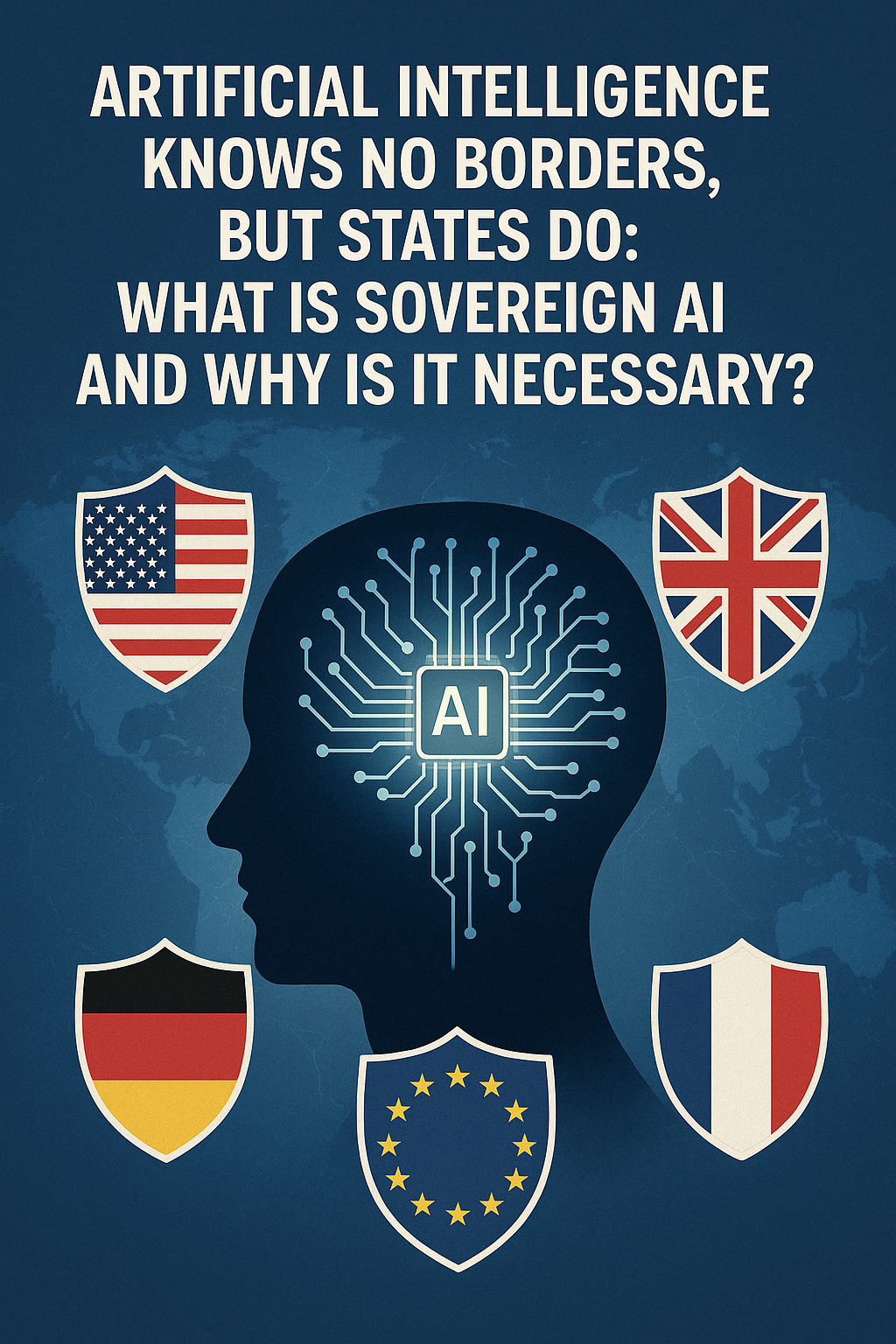
# The Rise of Sovereign AI: Why Nations are Racing for Technological Independence
## Introduction
In the 21st century, a new dimension of global power is rapidly taking shape, forged not from military might or economic dominance alone, but from the control of data, algorithms, and computing power. This is the era of **Sovereign AI**, a strategic imperative driving nations to develop and govern artificial intelligence capabilities independent of foreign influence. More than just a technological buzzword, sovereign AI represents a fundamental shift in geopolitics, as countries race to achieve technological independence in a field projected to add over $13 trillion to the global economy by 2032. This race is fueled by deep-seated concerns over national security, economic resilience, and cultural integrity, prompting governments worldwide to rethink their reliance on a handful of foreign tech giants and build their own AI ecosystems from the ground up.
## The Core Drivers of Sovereign AI
The global push towards AI sovereignty is not a singular phenomenon but a confluence of powerful strategic, economic, and cultural motivations. At its heart lies a desire for autonomy in a world where digital infrastructure is becoming as critical as physical territory.
First and foremost, **strategic autonomy and national security** are paramount. Advanced AI systems are "dual-use" technologies, critical for everything from managing smart electrical grids and financial markets to operating autonomous weapons and cyber defense platforms. A nation's reliance on AI models developed and controlled by a foreign power creates an unacceptable vulnerability. These external systems could be subject to manipulation, surveillance, or shutdown, posing a direct threat to a country's critical infrastructure and defense capabilities. Developing sovereign AI mitigates this risk, ensuring that a nation's most sensitive operations are powered by technology it controls.
Second, the drive for **economic competitiveness and growth** is a massive incentive. Leadership in AI is increasingly seen as a direct instrument of national power and prosperity. By fostering domestic AI innovation, nations aim to create high-value jobs, protect their intellectual property, and capture a significant share of the burgeoning AI market. Sovereign AI strategies often include substantial investments to support local startups and industries, ensuring that the economic benefits of the AI revolution are realized at home rather than being siphoned off by foreign corporations.
Third, there is a growing demand for **cultural and linguistic relevance**. The majority of today's leading large language models have been trained predominantly on English-language data, embedding an Anglo-Saxon cultural perspective. This can lead to biases, misinterpretations, and a general failure to reflect the unique social norms, values, and linguistic nuances of other societies. Sovereign AI allows nations to build models trained on their own data, in their own languages, aligned with their own ethical and legal frameworks. This ensures AI serves the specific needs of their citizens and public sector without the imposition of foreign cultural values.
Finally, **data sovereignty and privacy** are key drivers. Data is the lifeblood of AI. Nations are increasingly adamant about keeping their citizens' and state data within their own borders, both to protect privacy and to comply with national laws like the EU's General Data Protection Regulation (GDPR). This not only enhances security but also prevents the extra-jurisdictional application of foreign laws, ensuring that a nation's data—and by extension, its digital destiny—remains under its own control.
## The Geopolitical Battleground: Semiconductors and Talent
The ambition of sovereign AI runs headlong into the material realities of its foundation: the advanced semiconductors that power it and the human talent that creates it. This has turned the global technology supply chain into a fiercely contested geopolitical battleground.
AI's computational heavy lifting is performed by specialized chips like Graphics Processing Units (GPUs) and Tensor Processing Units (TPUs). The manufacturing of the most advanced of these chips is dangerously concentrated, with over 90% produced in Taiwan and South Korea. This concentration creates a critical chokepoint. Any disruption—whether from natural disaster, economic coercion, or military conflict—could bring global AI development to a screeching halt. This vulnerability is a primary driver of "techno-nationalism," a trend where nations prioritize strategic self-sufficiency over globalized efficiency.
In response, a veritable "chip war" has erupted. The United States has imposed sweeping export controls to limit China's access to advanced chip technology and manufacturing equipment, citing national security concerns. Simultaneously, it has launched the CHIPS and Science Act, a massive $280 billion initiative to "reshore" semiconductor manufacturing to American soil. In turn, China has retaliated with its own export restrictions on key minerals like gallium and germanium, essential for chip production. This tit-for-tat dynamic is fragmenting the once-integrated global supply chain, forcing nations and corporations to choose sides and build more resilient regional supply networks.
This hardware-focused conflict is mirrored by a global "talent war." The development of sovereign AI requires a deep bench of specialists in machine learning, data science, and semiconductor engineering—a pool of talent that is in critically short supply. Nations are aggressively competing to attract and retain this talent through financial incentives, research funding, and streamlined immigration policies. The tech giants, with their vast resources and access to cutting-edge computing power, hold a significant advantage, often making it difficult for governments and smaller startups to compete for the best minds.
## Architecting a National AI Ecosystem
Building a sovereign AI capability is a monumental undertaking that requires a coordinated national strategy across infrastructure, technology, and governance.
The first step is laying the foundation through immense investment in **digital infrastructure**. Sovereign AI requires massive computational power, which means building or securing access to high-performance computing clusters, vast data centers, and the enormous energy resources needed to run them. Nations are pouring billions into this effort. China is creating a National Integrated Computing Network, while India's flagship IndiaAI Mission includes plans to build a public compute infrastructure of thousands of GPUs.
A key technological tool in this effort is the development of **National Large Language Models (LLMs)**. Instead of relying on general-purpose global models, many countries are building their own LLMs tailored to their specific needs. Singapore developed SEA-LION, an LLM trained on 11 regional languages to better serve Southeast Asia. Similarly, initiatives in Italy and the Netherlands aim to create models that align with local public sector requirements and cultural contexts. While these national LLMs offer the promise of cultural attunement and data privacy, they also carry risks. Research shows that models can have significant safety vulnerabilities, particularly when dealing with less-resourced languages, potentially amplifying misinformation if not carefully governed.
This leads to the critical role of **governance and regulation**. A robust sovereign AI ecosystem requires clear rules of the road. Nations are adopting distinct philosophies. The European Union has pioneered a comprehensive, risk-based approach with its AI Act. China has implemented a security-first model, with a suite of statutes that grant the state significant control. In contrast, India is pursuing an "Enable, then regulate" philosophy, prioritizing innovation and adoption first while establishing principles for responsible AI to guide development.
## Case Studies in Sovereignty: China, India, and the EU
The global race for sovereign AI is not uniform; different nations are pursuing distinct strategies aligned with their geopolitical goals and domestic realities.
**China** represents the archetypal state-led model. Its "Next Generation Artificial Intelligence Development Plan" outlines a clear ambition: achieve global AI leadership by 2030. This strategy is fueled by massive state-backed investment funds, a focus on technological self-sufficiency in areas like semiconductors, and a security-first governance framework. China is also leveraging AI for global influence through its Digital Silk Road initiative, exporting its cloud services and AI-powered surveillance technologies to countries in the "Global South."
**India** is championing a vision of "AI for All," explicitly linking its sovereign AI ambitions to inclusive development. The government's IndiaAI Mission aims to democratize access to AI tools. Key pillars include building a national AI compute infrastructure, creating public data platforms like BHASHINI for Indian languages, and fostering a vibrant startup ecosystem. India is leveraging its successful Digital Public Infrastructure model as a blueprint for AI, seeking to empower a wide range of actors to build solutions for local needs.
**France**, within the broader **European Union**, exemplifies a regional approach to sovereignty. Recognizing its inability to compete individually with the US and China, the EU is pooling resources and creating a unified regulatory market. The strategy is aimed at preventing digital colonization by foreign tech giants. France actively supports domestic AI startups and research, while championing pan-European regulations like the AI Act to create a single, harmonized market that promotes "trustworthy AI" aligned with European values.
## Conclusion
The rise of sovereign AI marks a pivotal moment in the digital age. It represents a conscious uncoupling from the globalized, efficiency-driven technology ecosystem of the past, and a turn towards a more fragmented world where digital independence is a cornerstone of national sovereignty. Success will require a delicate balancing act between national ambition and international collaboration. The outcome of this race will not only determine which nations lead the next technological revolution but will fundamentally reshape the global balance of power for decades to come.