# Global AI Governance in 2026: Navigating a Fragmented and Accelerating Landscape
## Introduction
The year 2026 marks a pivotal moment for artificial intelligence, a period described as the "Year of Truth" for its global governance. AI has rapidly transitioned from a frontier technology to essential global infrastructure, underpinning critical sectors from financial markets and healthcare to national defense . This integration has elevated AI governance from a niche policy debate to a defining strategic issue for nations and corporations alike. The global landscape is characterized by a "race to AI regulation," with over 1,000 policy initiatives recorded across 69 countries .
This acceleration is driven by a growing awareness of AI's systemic risks, its role in defining economic sovereignty, and the urgent need to maintain public trust in the face of deepfakes and algorithmic opacity . As nations decide between unified global frameworks and fragmented national laws, three dominant governance models have emerged: the EU’s comprehensive regulatory approach, the US’s market-driven strategic framework, and China’s state-integrated system. This report analyzes these diverging paths, examines multilateral efforts to find common ground, and assesses the key challenges and opportunities that will define the future of AI governance.
## Regional Developments: A Fragmented Landscape
As of 2026, nations have adopted distinct approaches to AI regulation, reflecting their unique political, economic, and social priorities. This has resulted in a fragmented but dynamic regulatory environment.
### The European Union: The Regulatory-First Model
The European Union has established the world's most comprehensive and binding legal framework for AI. The EU AI Act (Regulation 2024/1689), which becomes fully enforceable for most systems by August 2, 2026, solidifies Europe's role as a global standard-setter . The Act employs a risk-based framework:
* **Unacceptable Risk:** Prohibits practices like government-led social scoring and real-time biometric surveillance. * **High Risk:** Covers critical sectors like infrastructure and law enforcement, requiring strict oversight and registration. * **Limited Risk:** Systems like chatbots must be transparent about their non-human nature . * **Minimal Risk:** The vast majority of AI applications fall into this category and are free from specific legal obligations .
The Act also imposes significant obligations on providers of General-Purpose AI (GPAI) models, particularly foundation models like GPT-4. Providers must offer detailed transparency summaries and comply with EU copyright law. Models designated as posing "systemic risk"—for instance, those trained with computing power exceeding 10^25 FLOPs—face stricter rules, including mandatory adversarial testing, cybersecurity assessments, and incident reporting .
With fines for non-compliance reaching up to €35 million or 7% of global annual turnover, and its extraterritorial "Brussels Effect" applying to any company serving the EU market, the AI Act is poised to become a de facto global standard .
### The United States: The Strategic-Acceleration Model
In contrast to the EU, the United States has pursued a more flexible, market-oriented approach, favoring voluntary frameworks and empowering existing sectoral regulators over comprehensive, top-down legislation . The cornerstone of this strategy is the National Institute of Standards and Technology (NIST) AI Risk Management Framework (AI RMF), a voluntary guide that is becoming an operational standard for federal agencies .
The U.S. strategy focuses on maintaining its competitive edge through strategic investment, public-private partnerships, and targeted export controls on critical technologies like advanced semiconductors . Recognizing the emerging challenge of autonomous systems, NIST launched an initiative in February 2026 to develop standards for AI agents, focusing on auditability and containment . Sectoral agencies such as the FDA, SEC, and FTC are actively applying their existing authorities to govern AI within their respective domains, creating a patchwork of domain-specific rules rather than a single horizontal law .
### China: The State-Integrated Model
China’s approach is highly prescriptive, tightly integrating AI development and governance with national strategic objectives . A series of regulations, including the Interim Measures for Generative AI Services (2023), mandates that AI systems align with "core socialist values," register with the Cyberspace Administration of China (CAC), and undergo security assessments. All AI-generated content must also be watermarked . This model is characterized as "regulation through technical control," embedding governance directly into AI system architecture. In 2026, China is also pursuing a more influential global role by promoting its open-source AI models and standards .
## Multilateral Efforts and International Cooperation
Amidst regional fragmentation, numerous international forums are working to establish common norms, promote interoperability, and mitigate global risks.
### The United Nations and Global Dialogue
The UN has emerged as a central venue for global AI discussions. The High-Level Advisory Body on Artificial Intelligence (HLAB-AI), which concluded its work in October 2026, published its final report, "Governing AI for Humanity," in 2024. The report proposed a blueprint for global AI governance, including the creation of an International Scientific Panel on AI, modeled on the IPCC, to provide authoritative scientific advice to policymakers . While these UN-backed dialogues represent the first truly global phase of AI governance, they remain influenced by geopolitical rivalries, often managing risks at the margins while core strategic competition continues .
### The AI Summit Series and G7/G20 Initiatives
The global AI Summit series has evolved significantly since its inception. Beginning with the AI Safety Summit in the UK (2023), the focus broadened at the AI Action Summit in France (2025) and culminated in the AI Impact Summit in India in February 2026 . Hosted by a Global South nation for the first time, the India summit shifted the agenda from a narrow focus on safety to the practical implementation of AI for economic and social progress. The summit concluded with the Delhi Declaration, signed by 91 countries, which committed to sharing the benefits of AI widely while ensuring it is developed as a "secure, trustworthy and robust" technology .
Alongside this, the G7 Hiroshima AI Process has established a voluntary Code of Conduct for advanced AI developers, while the G20 serves as a high-level platform for debating shared principles and supporting capacity-building in developing nations .
### US-China Bilateral Talks
In a significant geopolitical development, the U.S. and China initiated formal bilateral talks on AI safety in May 2026, following a meeting between their respective presidents. U.S. Treasury Secretary Scott Bessent announced the goal of establishing a protocol of best practices to prevent non-state actors, such as terrorist groups or criminal networks, from acquiring and misusing powerful AI models . These discussions acknowledge the shared risks posed by advanced AI, even as the two nations remain strategic competitors .
## Key Challenges and Emerging Opportunities
The rapid evolution of AI technology continues to outpace governance, presenting persistent challenges while also creating new opportunities for strategic advantage.
### The Agentic AI Governance Gap
One of the most significant challenges in 2026 is the governance of autonomous AI agents—systems capable of taking independent actions in the physical or digital world. Existing regulatory frameworks, largely designed for predictive models, do not fully address the unique risks posed by agentic AI. This gap creates critical problems, including unclear liability when an agent causes harm, a "monitoring paradox" where constant human oversight negates the agent's efficiency, and legal gray zones when agents operate across borders . Singapore's agentic AI framework is a pioneering attempt to address this challenge, but global consensus remains elusive .
### Geopolitical Competition and "Sovereign AI"
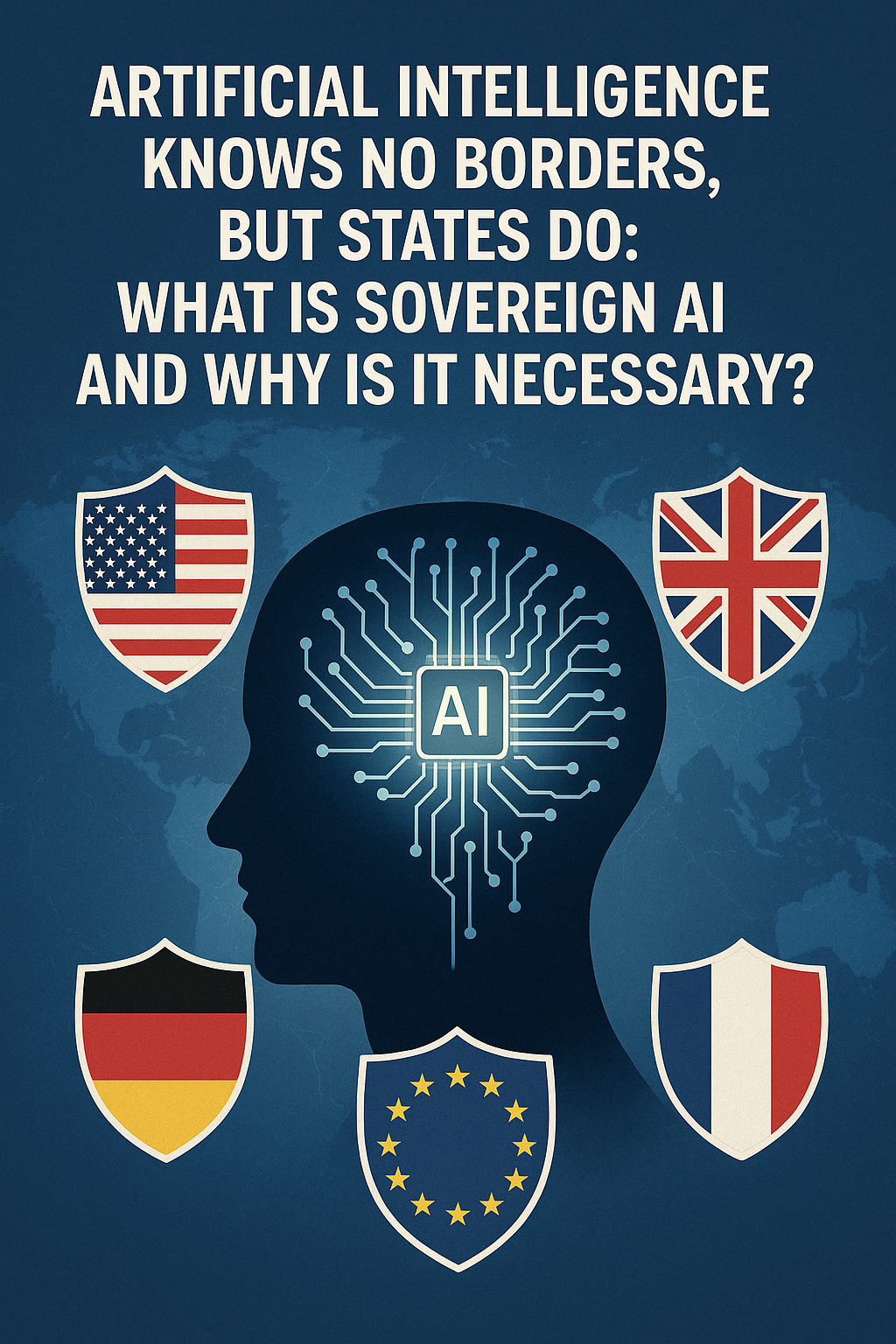
AI governance is no longer just about ethics; it is now a core component of industrial policy and national security . Nations are increasingly pursuing "sovereign AI"—the development of domestic AI capabilities and infrastructure to reduce reliance on foreign technology and secure strategic autonomy . This trend is exemplified by India's launch of its own LLM and the U.S. strategy of exporting its AI technology to build allied capabilities and counter Chinese influence . Countries with clear and stable regulatory environments are better positioned to attract investment in critical AI infrastructure like data centers .
## Conclusion: The Path Forward in an Era of AI Transformation
The year 2026 is a defining moment for global AI governance. The world is grappling with a fundamental tension between the need for protective, harmonized international rules and the desire for national regulatory freedom to foster innovation . The divergent paths taken by the European Union, the United States, and China have created a fragmented landscape, yet there is an emerging convergence around core principles of risk-based classification, transparency, and accountability .
As AI becomes deeply embedded in our economies and societies, the stakes have never been higher. The full enforcement of the EU AI Act, the strategic maneuvering between the US and China, and the growing influence of the Global South are all shaping the trajectory of regulation. The central question remains whether the international community can proactively develop a coherent framework to manage the profound risks of AI, or if a major AI-driven catastrophe will be the ultimate catalyst for unified global action . The decisions made today will determine whether AI fulfills its promise as a tool for shared human progress or becomes a source of instability and inequality.