# The New Arms Race: How AI is Reshaping Global Power in 2026
*March 13, 2026*
The defining technological rivalry of the 21st century is no longer a distant prospect; it is the reality of 2026. A new global arms race is underway, but its arsenals are not built of steel and explosives. They are forged from silicon, data, and algorithms. The competition for dominance in artificial intelligence has escalated into a multi-front conflict, reshaping the balance of global power with breathtaking speed. This is a contest fought not only in research labs but also in the construction of continent-spanning supercomputers, the strategic deployment of open-source code, and the quiet militarization of intelligent systems.
At the heart of this struggle are the United States and China, two titans locked in a race for technological supremacy. Yet, the implications extend far beyond their borders, forcing every nation to navigate a complex landscape of opportunity and peril. The race for AI is a race for economic prosperity, military superiority, and the power to write the rules of the future. As we stand in 2026, the contours of this new world order are being drawn, one line of code and one gigawatt of power at a time.
## The Infrastructure Race: Silicon Empires and Power Plays
The theoretical pursuit of AI has given way to a brutal physical reality. The mantra of 2026 is that intelligence is built on infrastructure, and the scale of that infrastructure is staggering. The race has shifted from an "algorithm-first" to an "infrastructure-first" approach, where the physical constraints of power and heat now dictate the boundaries of innovation.
Leading this charge is **Project Stargate**, a monumental collaboration between Microsoft and OpenAI. What began as a rumored $100 billion supercomputer in 2024 has ballooned into a $500 billion initiative by early 2026, making it the largest single capital investment in a computing project in history. The project's goal is nothing short of building the computational foundation for Artificial General Intelligence (AGI) through a series of "AI Superfactories" across the United States. At its core is a "Phase 5" supercomputer, a single facility costing over $100 billion, designed to house millions of next-generation GPUs from NVIDIA and Microsoft's own custom silicon.
The sheer scale of Stargate is difficult to comprehend. The entire facility is designed as one monolithic computer, a departure from traditional data center architecture. Its energy demands are equally colossal, with a single campus projected to require up to 5 gigawatts of power—enough to light up five million homes. To meet this demand, the consortium is turning to nuclear energy, including restarting the Three Mile Island facility (now the Crane Clean Energy Center) and pioneering the use of Small Modular Reactors (SMRs). This has triggered what analysts call a "trillion-dollar arms race," forcing competitors like Google and Meta to accelerate their own infrastructure investments to keep pace.
While the U.S. makes headlines with its half-trillion-dollar bet, China is identified as its primary competitor, making its own solid investments in AI infrastructure. Though specific figures are less public, China's national strategy is clear. Its "AI+" plan, approved in 2025, explicitly supports the development of an open AI ecosystem and self-controllable technologies. To power this ambition, China is rapidly expanding its energy production, recognizing that in the AI era, kilowatts are as crucial as code. This battle of infrastructure—a contest of capital, engineering, and raw power—is the physical bedrock upon which the new global power structure is being built.
## Open Source as Geopolitical Strategy
Beyond the hardware, the AI competition is being waged with a more subtle but equally potent tool: open-source software. Once the domain of collaborative idealists, open-source AI has become a key instrument of geopolitical strategy, creating competing ecosystems that vie for global influence.
China has masterfully weaponized this approach. By releasing powerful, free-to-use AI models, Chinese tech giants are rapidly gaining influence, particularly in the Global South. Companies like DeepSeek and Alibaba are releasing models such as **DeepSeek V4** and **Qwen 3.5** that, in some benchmarks, rival or even surpass their proprietary Western counterparts at a fraction of the cost. This strategy is paying dividends. The combined global market share of DeepSeek and Qwen models surged from just 1% in January 2025 to approximately 15% a year later. Critically, these models are being optimized for Chinese-made hardware, like Huawei's Ascend chips, signaling a deliberate effort to build a self-reliant technology stack free from Western dependence. This soft power push is a core component of China's Digital Silk Road, creating technological dependencies and positioning Beijing as a leader in global AI cooperation.
The United States is countering by promoting its own AI tech stack as the global standard. The current administration's "America's AI Action Plan" emphasizes limited regulation to foster innovation and encourages the export of American open AI models. The U.S. is also forging AI-focused partnerships with key allies and continues to use targeted export controls to slow China's access to the most advanced chips. However, this strategy is complicated by an internal "regulatory tug-of-war" between federal and state governments.
This dynamic forces developing nations into a difficult choice. They can align with the Chinese ecosystem, which offers cheaper, more accessible, and rapidly improving open-source tools, but with potential risks to data sovereignty and censorship. Or they can opt for the Western stack, which offers cutting-edge innovation but often comes with higher costs and access restrictions. The battle for open-source dominance is not just about market share; it's about who sets the standards, controls the interfaces, and ultimately shapes the digital realities for billions of people.
## AI as a Weapon: The New Frontier of Conflict
As AI becomes more integrated into the global economy, it is also being woven into the fabric of modern warfare. The abstract race for AI supremacy is taking on a harder, more dangerous edge as nations invest heavily in militarizing the technology, creating both unprecedented capabilities and terrifying new vulnerabilities.
Global military spending on AI is skyrocketing, projected to reach nearly $39 billion by 2028. The U.S. Department of Defense is a primary driver, with its budget for fiscal year 2026 swelling to $1 trillion, partly to accelerate the adoption of AI in everything from logistics and reconnaissance to autonomous weapons systems. Programs like Project Maven, which uses AI to analyze drone footage for target identification, are becoming standard.
However, this increasing reliance on AI for critical military functions introduces a novel and insidious threat: **model poisoning**. This form of cyberattack involves an adversary corrupting an AI's training data or directly altering its internal parameters. The goal is to cause the AI to make catastrophic errors at critical moments—to misidentify a friendly vehicle as hostile, to miscalculate a trajectory, or to fail to recognize an incoming threat.
This is not a theoretical risk. Security experts in 2026 have identified data poisoning as a "new zero-day" threat, as it is incredibly difficult to detect. Research has shown that a model's behavior can be compromised with a surprisingly small amount of malicious data. The consequences in a military context are profound, potentially leading to operational disruption, loss of life, and the erosion of trust in automated systems. In response, the U.S. military's research arm, DARPA, has launched the SABER project, contracting defense giants like Lockheed Martin and BAE Systems to develop methods to defend military AI from such attacks. This new front in cyber warfare—the battle for the integrity of AI minds—is one of the most urgent and clandestine aspects of the new arms race.
## The Global Stakes: A World Divided
While the United States and China dominate the headlines, the AI revolution is a global phenomenon with profound stakes for every nation. Smaller countries and those in the Global South find themselves in a precarious position, caught between the gravitational pull of the two AI superpowers. They are structurally dependent on the major powers for the talent, capital, and computing power needed to participate in the AI economy, creating a risk of a new form of digital colonialism.
In response, the international community is scrambling to establish rules of the road. Initiatives like the **UN Global Dialogue on AI Governance** have become crucial forums for debate, giving smaller nations a voice in shaping the norms that will govern this powerful technology. The UN's goal is to foster safe and trustworthy AI, promote interoperability between different regulatory regimes, and ensure the benefits of AI contribute to sustainable development goals, rather than exacerbating global inequalities.
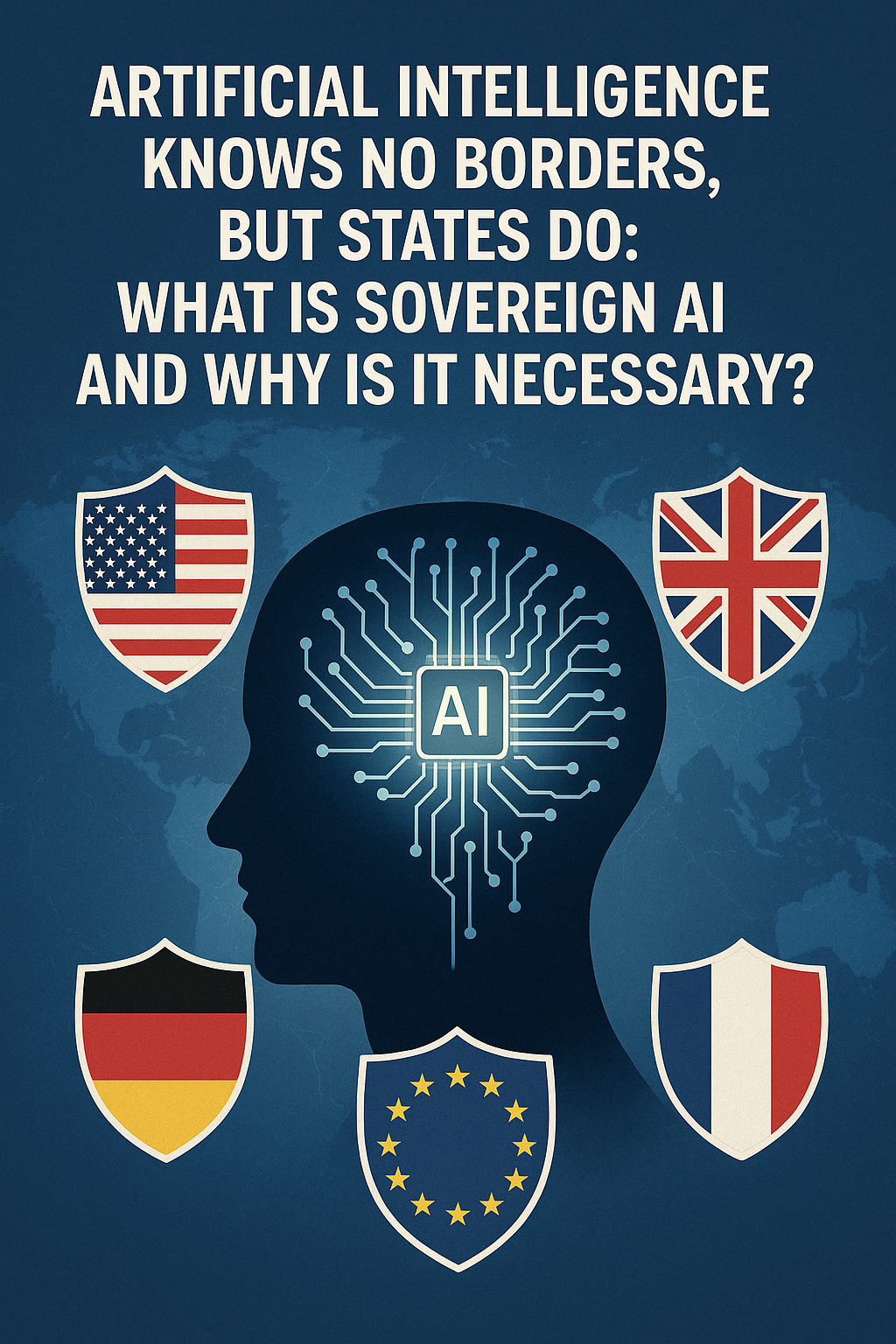
Yet, even here, the geopolitical rivalry casts a long shadow. The U.S. has expressed skepticism toward centralized global governance, preferring to set de facto standards through the widespread adoption of its technology. China, conversely, has positioned itself as a champion of a multilateral, consensus-driven approach, a stance that aligns it with many developing nations and serves to dilute American influence. Many countries are now pursuing "sovereign AI" initiatives, attempting to build domestic capacity to protect their national security and cultural values. But building an entire AI stack from scratch is prohibitively expensive, forcing strategic choices about what to build, what to buy, and with whom to partner.
## Conclusion: The Race to Define Reality
The AI arms race of 2026 is a complex, multi-dimensional conflict that is fundamentally reshaping our world. It is a race for computational power, measured in gigawatts and dollars. It is a battle for influence, waged with open-source code and diplomatic partnerships. And it is a military competition, unfolding in the silent, digital realm of algorithms and data.
The competition between the United States and China is not merely about which nation will achieve a technological edge. It is about which set of values, standards, and systems will underpin the global architecture of the 21st century. The choices being made today—in corporate boardrooms, government labs, and international forums—will have consequences that reverberate for decades. As AI becomes ever more powerful and pervasive, the race for dominance is becoming a race to define reality itself. The world is watching, and the stakes could not be higher.