# The New AI World Order: Beyond the US-China Bipolar Race
**May 5, 2026**
The global artificial intelligence race is often framed as a two-power contest between the United States and China. While this rivalry remains a central feature of the international landscape, this simplistic view is rapidly becoming obsolete. A new, more complex dynamic is emerging: a multipolar system where a diverse group of "middle powers" are aggressively pursuing their own AI capabilities. Driven by the strategic imperative of "sovereign AI," these nations are fragmenting the once-bipolar world, creating a competitive and unpredictable geopolitical arena where control over algorithms and data is paramount to national security and economic survival.
## The Rise of "Sovereign AI"
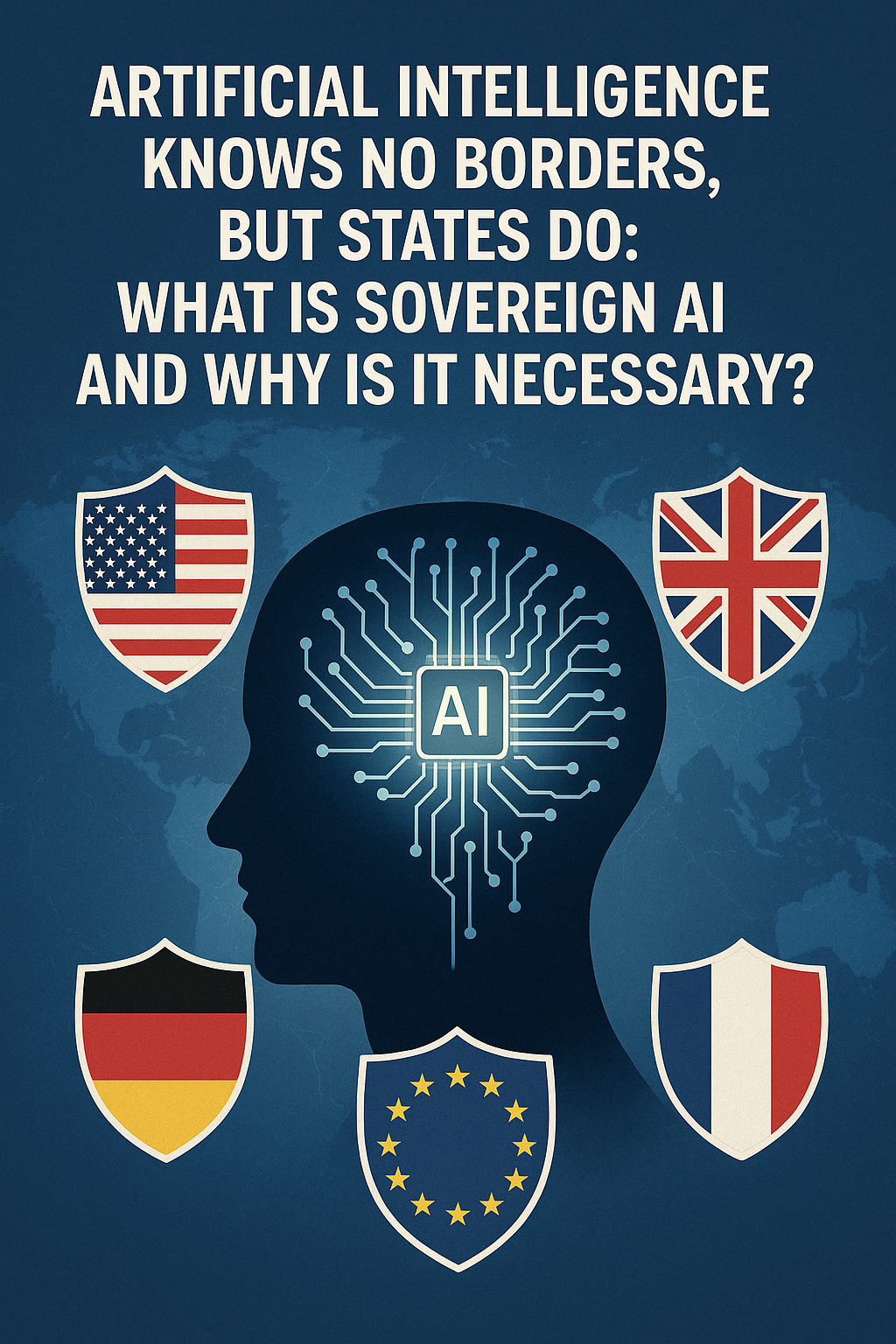
At the heart of this global restructuring is the concept of **sovereign AI**. This term refers to a nation's capacity to develop and control its own AI data, infrastructure, and governance frameworks, ensuring they align with national interests, local laws, and security requirements. Once a niche policy matter, AI has now become a fundamental element of national sovereignty. Its foundational role in economic resilience, digital governance, and critical military systems means that dependency on foreign AI technology is a critical vulnerability.
Achieving sovereign AI is a multidimensional challenge. It demands control over several key layers: * **Data:** Nations are increasingly treating local data as a strategic asset, implementing data residency and protection laws to ensure sensitive information remains within their jurisdiction. * **Infrastructure:** True sovereignty requires control over the physical and digital infrastructure that powers AI, from semiconductor chips and cloud computing to the gigawatt-scale data centers needed for training advanced models. * **Talent:** A domestic pipeline of skilled researchers and engineers is essential to foster innovation and reduce reliance on foreign expertise. * **Governance:** Nations must establish their own rules, regulations, and ethical guidelines to ensure AI systems are deployed safely and in a manner consistent with their societal values.
This pursuit is not merely about technological prestige; it is a strategic necessity. For national security agencies, sovereign AI is important for protecting sensitive operations and helping military AI systems function in contested or disconnected environments. As governments and industries increasingly rely on AI, the ability to maintain control over these systems is becoming a cornerstone of 21st-century power.
## Middle Powers Carve Their Niche
The push for sovereign AI is fueling the rise of a new class of players in the global AI ecosystem. No longer content to be consumers of American or Chinese technology, middle powers across the globe are leveraging their unique strengths to build independent capabilities and influence the direction of AI development.
This diversification has strategic importance. The concentration of computing power and advanced model development in just a few countries creates chokepoints that can be disrupted by geopolitical shocks or shifts in government policy. The emergence of AI middle powers offers a more resilient and diversified global supply chain.
Several nations are emerging as key players: * **The European Union:** While not a traditional nation-state, the EU is acting as a regulatory superpower. Through its landmark AI Act, it is establishing comprehensive legal frameworks that could set a global standard, a phenomenon known as the "Brussels Effect." By combining the talent pools and nascent startup ecosystems of its member states, the EU aims to foster the development of AI models that are protective of user data and aligned with its values. * **Gulf States:** Nations like Saudi Arabia and the United Arab Emirates are leveraging immense sovereign wealth funds to make focused, large-scale investments. They are rapidly building data center infrastructure, attracting top AI talent, and funding the development of high-performing large language models in Arabic. * **East Asian Tech Hubs:** Building on established technological ecosystems and deep expertise in hardware, Japan and South Korea are formidable contenders. Their world-leading semiconductor industries give them a critical role in the AI supply chain, which they are leveraging to advance their own national AI strategies. * **Research Powerhouses:** Countries like the United Kingdom, Canada, and Israel possess robust research ecosystems and a high concentration of top-tier AI specialists. Their contributions to fundamental AI research and model development give them influence far beyond their size. * **India:** Charting a unique path, India is building its sovereign AI capabilities on the foundation of its Digital Public Infrastructure (DPI)—the open, interoperable systems like Aadhaar (digital identity) and UPI (digital payments). This public-led model aims to keep core infrastructure under public governance while fostering private sector innovation on top.
These efforts demonstrate that the global AI map is being redrawn. It is no longer a world of two poles but a complex network of ambitious, specialized, and increasingly independent actors.
## Competing Visions for Governance
As more nations develop their own AI capabilities, the world is witnessing a fragmentation not just of technology, but of the rules that govern it. The battle to define the norms, ethics, and technical standards for AI is becoming a central arena for geopolitical competition.
The EU's AI Act is the most prominent example of a proactive regulatory approach. It uses a risk-based system, banning applications that pose an "unacceptable risk" (such as social scoring), imposing strict requirements on "high-risk" systems (like those used in critical infrastructure or law enforcement), and mandating transparency for technologies like deepfakes and generative AI. This framework is intended to become a global benchmark, similar to the GDPR's influence on data privacy.
This contrasts sharply with other models. The United States has historically favored a more market-driven, innovation-focused approach with less top-down regulation. China integrates AI development directly with its national security and state-control objectives. Meanwhile, other middle powers like Singapore are experimenting with voluntary guidelines and industry-led standards.
This divergence in regulatory philosophies creates a complex and challenging environment for international cooperation. In an effort to bridge these gaps, the United Nations has stepped in, creating a High-level Advisory Body on AI. The UN aims to foster a globally inclusive dialogue, ensuring that governance frameworks are anchored in human rights and that developing nations are not left behind. However, the powerful trend towards sovereign control and regulatory competition presents a significant challenge to these multilateral efforts.
## High-Stakes Implications for Global Security
The multipolar competition for AI leadership has significant implications for global security. The same technologies driving economic growth are also transforming the nature of warfare. The pursuit of sovereign AI is inextricably linked to the quest for military advantage, creating the conditions for a new kind of arms race.
AI is being integrated into nearly every facet of modern military operations. It enhances intelligence analysis by processing vast amounts of data from sensors and satellites, drastically shortening the decision-making cycle known as the "OODA loop" (Observe, Orient, Decide, Act) and giving commanders a critical speed advantage.
AI is also enabling the development of Lethal Autonomous Weapon Systems (LAWS), which can independently select and engage targets with limited human intervention. Coordinated groups of AI-guided drone swarms can overwhelm traditional air defenses, representing a destabilizing leap in offensive capability. The use of AI-guided weapons in recent conflicts has moved these technologies from theoretical discussion into active deployment. This raises urgent ethical questions about accountability and the risk of "flash wars," where AI systems operating at machine speed could escalate conflicts before humans can intervene.
Beyond the physical battlefield, AI is a potent weapon in information warfare. AI-powered "deepfakes" can create highly realistic but entirely fabricated audio and video, allowing malicious actors to spread potent disinformation, sow chaos, and undermine public trust. This form of "cognitive warfare" can be used to influence public sentiment or heighten political instability, blurring the lines between peace and conflict.
## Conclusion: A New, Unsettled Landscape
The era of a primarily bipolar AI world is receding. The global landscape is now defined by a multipolar competition, driven by the widespread pursuit of sovereign AI. Middle powers from Europe to the Middle East and Asia are increasingly moving from technology adoption to active strategic shaping. This shift is creating a more distributed, diverse, and resilient global AI ecosystem, but it is also one fraught with fragmentation and new vectors of conflict. The competition is playing out across technology, talent, and, most critically, the very rules that will govern this powerful technology. As AI becomes more deeply integrated into our economies and security systems, navigating this contested and unsettled landscape will be the defining geopolitical challenge of our time.