# Racing to Regulate: How the World Is Trying to Govern Artificial Intelligence
**Date: 2026-04-28**
### Introduction
As artificial intelligence capabilities advance at a breathtaking pace, a parallel race is unfolding across the globe: the race to regulate. From the halls of the United Nations to the national assemblies of emerging tech hubs and the corporate boardrooms of Silicon Valley, a complex effort is underway to establish rules for one of the most transformative technologies in human history. By April 2026, the world is not asking *if* AI should be governed, but *how*. This push is fragmented, driven by competing interests and shaped by a three-way tension between fostering innovation, ensuring safety, and protecting national sovereignty—creating a complex patchwork of policies and strategic maneuvers that will define the future of AI.
## Section 1: The UN's Landmark Move: A Global Scientific Panel on AI
In an effort to forge a unified path, the United Nations has stepped onto the world stage with its most significant AI initiative to date. In August 2025, the UN General Assembly established the Independent International Scientific Panel on AI, the first global scientific body of its kind. Its 40 members—a multidisciplinary group of leading experts from academia, industry, and civil society—were officially appointed in February 2026 and have now begun their work.
The panel's mandate is to produce annual, evidence-based scientific assessments of AI's opportunities and risks. Crucially, these reports are designed to be policy-relevant but non-prescriptive, aiming to inform governments without dictating rules. The panel is tackling some of the most profound questions surrounding AI, including its impact on labor markets, its potential for "augmented intelligence" to enhance rather than replace human capabilities, and the need for new solutions like AI watermarking to distinguish between human and machine-generated content. A core focus is ensuring that AI models incorporate diverse cultures and languages, preventing a future where the technology reflects the values of only a handful of nations.
The panel's first major report is highly anticipated and scheduled for release at the inaugural Global Dialogue on AI Governance in Geneva on July 6-7, 2026. This dialogue aims to become an annual forum for governments and stakeholders to discuss the safe development of AI, bridge the capacity gaps in developing countries, and promote interoperability between national regulations.
However, this multilateral push for cooperation is not universally embraced. While China and many nations in the Global South strongly support a UN-led framework to ensure inclusivity, the United States under the Trump administration has voiced strong opposition. The current US administration views such global governance initiatives as a potential brake on innovation and a threat to American technological leadership, creating a significant geopolitical rift at the very heart of the global dialogue.
## Section 2: National Regulations in Motion: From Seoul to Singapore
While the UN works toward a global framework, individual nations are not waiting. They are actively crafting their own rules, creating a diverse landscape of regulatory approaches. South Korea and Singapore offer two distinct and influential models.
In January 2026, South Korea's **Artificial Intelligence Basic Act** officially took effect, making it one of the first countries to implement a comprehensive national AI law. The act embodies a dual strategy of promotion and regulation, aiming to catapult the nation into the top three AI powerhouses by 2030. It establishes a unified, risk-based framework requiring transparency, human oversight, and fairness. Systems classified as **high-impact AI**—those affecting physical safety or fundamental rights in areas like energy or recruitment—face strict obligations, including pre-deployment impact assessments and continuous monitoring. The law also targets generative AI, mandating clear labeling for AI-generated content and deepfakes. This regulatory push is backed by massive state investment, including up to KRW 4 trillion (approx. $2.7 billion USD) for a national AI computing center, demonstrating a clear commitment to both governance and growth.
In contrast, Singapore has adopted a more agile, innovation-focused approach. Instead of a single landmark law, it has built a sophisticated governance infrastructure based on sectoral guidelines, regulatory sandboxes, and voluntary frameworks. Its **National AI Strategy 2.0**, released in late 2024, champions AI's transformative potential. Singapore's flagship tools include **AI Verify**, a voluntary certification and testing standard, and its influential Model AI Governance Framework. In the financial sector, its principles of Fairness, Ethics, Accountability, and Transparency (FEAT) have become a regional benchmark. By providing industry-led guidance and allowing companies to experiment in controlled environments, Singapore aims to foster responsible innovation without imposing rigid, top-down legislation. This approach is supported by a pledge of over S$1 billion for AI-related infrastructure.
## Section 3: The US-China Divide: Competing Visions for AI Governance
The global AI race is dominated by the strategic competition between the United States and China, whose starkly different visions for development and governance are shaping international alliances and technological trajectories.
The **United States** is focused on maintaining its lead in cutting-edge research, particularly in "frontier models" and the pursuit of Artificial General Intelligence (AGI). The US government's primary policy tools are **export controls** on advanced chips to slow China's progress and the active promotion of its own AI technology stack as the de facto global standard. The Trump administration's "sovereign AI" vision, exemplified by the proposed $500 billion Stargate project, reflects a belief that nations must control their own AI infrastructure—reinforcing its skepticism of cooperative global governance.
**China**, meanwhile, is pursuing a "full-stack" developmental strategy that prioritizes practical application and integration into the physical world. Driven by US export controls, China has embarked on a major effort to achieve semiconductor self-sufficiency while innovating in model efficiency. Many Chinese firms have adopted an open-source strategy, and models from companies like Alibaba are gaining massive global popularity. China is also heavily investing in "embodied AI"—robotics, autonomous vehicles, and drones—leveraging its manufacturing dominance. On the world stage, Beijing has positioned itself as a champion of multilateralism and a voice for the Global South, advocating for an inclusive approach to AI governance that directly challenges US leadership.
## Section 4: Corporate Giants and the Lobbying Battle
Away from the public spotlight of diplomatic summits, another intense battle over AI rules is being waged by corporate lobbyists. As of April 2026, tech giants are pouring unprecedented sums into influencing regulation. In the first three months of 2026 alone, 11 major tech companies—including Google, Meta, OpenAI, and Anthropic—spent a collective $20 million on federal lobbying in the US. Alphabet, Meta, and Microsoft now employ over 300 lobbyists, roughly one for every two members of Congress.
California has become a key battleground, with tech and crypto companies spending over $39 million in 2025 to influence the state's AI legislation. OpenAI is aggressively pushing to preempt individual states from passing their own AI laws, while a pro-AI group called "Leading the Future" has reportedly assembled a $100 million fund to support AI-friendly candidates in the 2026 midterm elections. This deluge of corporate cash raises profound questions about whether public-interest regulations can survive in the face of such concentrated financial power.
## Section 5: The Core Tensions: Innovation vs. Safety vs. Sovereignty
The global scramble to regulate AI is fundamentally defined by the clash of three powerful, often contradictory, imperatives: the drive for **innovation**, the demand for **safety**, and the assertion of national **sovereignty**.
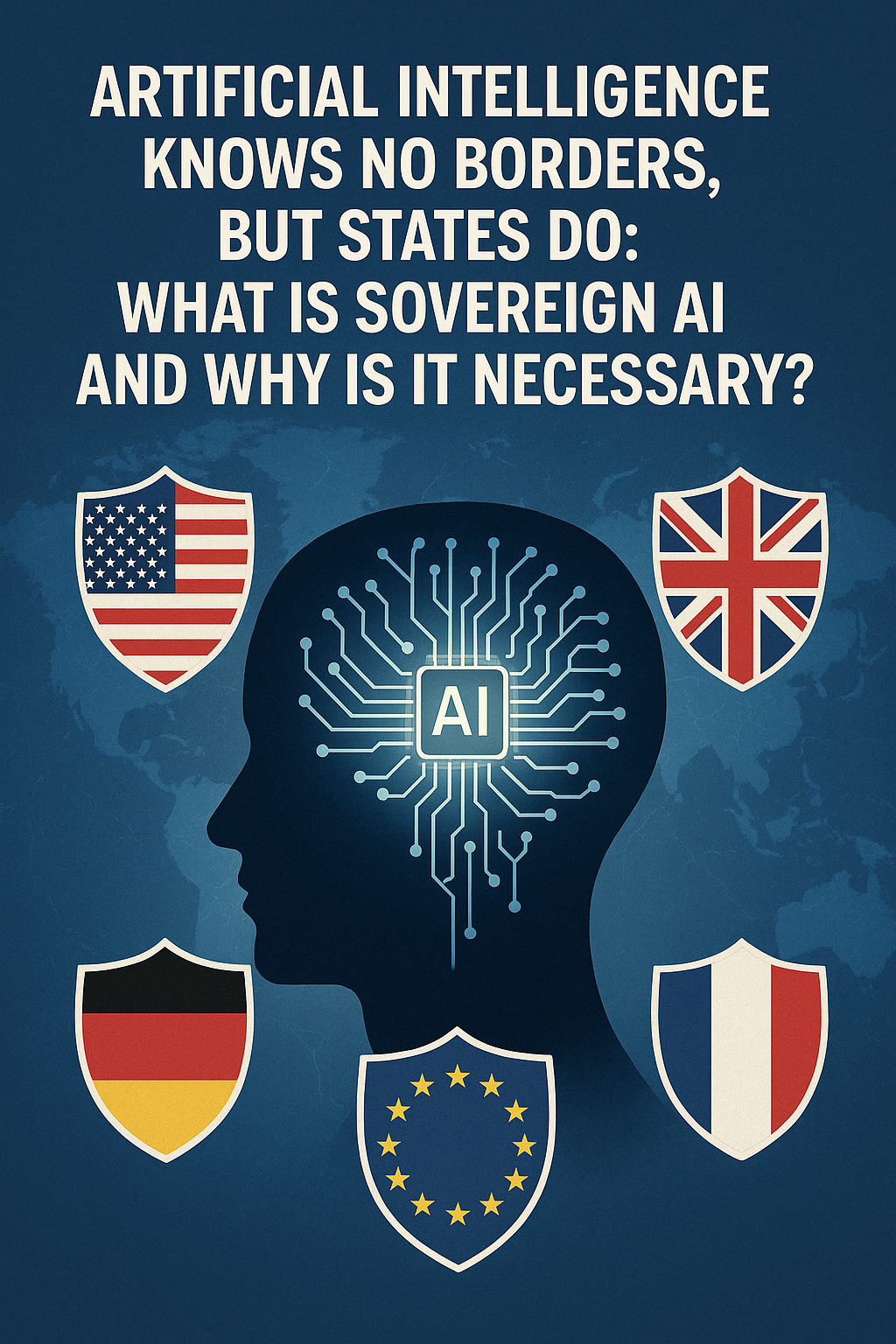
This conflict is starkly illustrated by the "Sovereignty vs. Safety Paradox." While there is a global desire for unified safety standards to prevent catastrophic AI risks, nations are fiercely protective of their most advanced "frontier" AI models. At the UN, a proposal for a global AI accord requiring a transparent registry of powerful AI systems is being hamstrung by a "Sovereignty Clause" that would allow nations to exempt "state-critical" systems from inspection, creating a massive loophole. Corporations bolster this position with the "innovation argument," claiming that transparency requirements amount to industrial espionage and would stifle progress.
These tensions have led to the emergence of three distinct governance models: 1. **The European Union's rules-first approach**, which treats AI as a product category to be regulated based on risk, emphasizing rights and market-shaping. 2. **The US's innovation-first, security-first approach**, which uses its technological alliances, export controls, and promotion of its own tech stack as primary governance tools. 3. **China's security-first, state-supervised approach**, which uses licensing, content controls, and security assessments to ensure AI development aligns with state stability and control.
This divergence is further complicated by the fact that sovereignty is no longer just about laws; it is about controlling the physical infrastructure of AI. Governments are now treating data localization, domestic computing capacity, chip supply chains, cloud procurement, and even energy policy as strategic tools to assert control over their digital futures.
## Conclusion: Can the World Agree on AI Rules?
As of mid-2026, the race to regulate AI is accelerating, but it is not moving toward a single finish line. The vision of a unified global treaty governing artificial intelligence appears increasingly distant, eclipsed by geopolitical rivalries and powerful corporate interests. The UN's scientific panel offers a beacon of hope for evidence-based policymaking, but its non-prescriptive mandate means it cannot force consensus.
Instead, the world is fracturing into competing regulatory blocs. The US, China, and the EU are charting divergent paths, while agile nations like South Korea and Singapore are creating their own hybrid models. The result is a complex, fragmented landscape where multinational companies must navigate a maze of conflicting rulebooks.
The most likely outcome is not a single global standard, but what some experts call a system of "competing compliance regimes" or a framework of "common floors with local ceilings"—a baseline of shared principles overlaid with nationally specific rules. The decisions being made today—in closed-door diplomatic meetings, open parliamentary debates, and behind-the-scenes lobbying efforts—are creating the rulebook for the intelligence age. Whether that rulebook ultimately prioritizes open innovation, collective safety, or national power remains the defining question of our time.