# Sovereign AI: Why Nations Are Racing to Build Their Own Artificial Intelligence
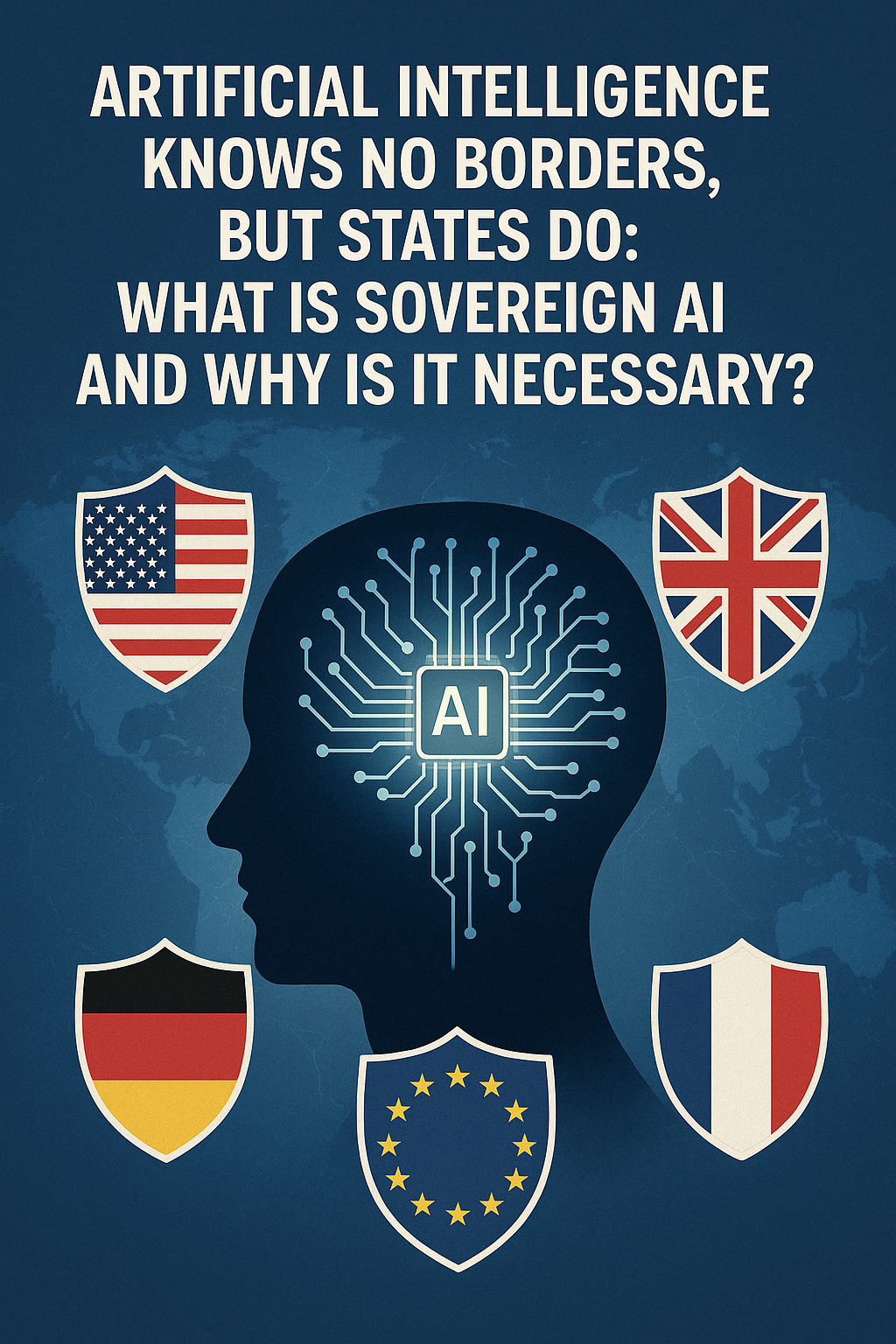
A new global race is underway. It isn't for territory or natural resources in the traditional sense, but for something far more intangible yet powerful: artificial intelligence. From Paris to New Delhi, governments are pouring billions into a strategic imperative known as **Sovereign AI**. This is the drive for a nation to develop, deploy, and control its own AI models, infrastructure, and data, aligning them with national goals, values, and security interests.
The push is fueled by a potent mix of economic ambition, national security anxieties, and the fear of being left behind in a world increasingly shaped by algorithms developed elsewhere. As a handful of corporations and countries dominate the AI landscape, others are asking a critical question: can we afford to outsource our digital future? This article explores the global rush for AI sovereignty, examining the diverse strategies nations are adopting, the immense challenges of global governance, and the delicate balance between national control and international cooperation.
## What is Sovereign AI?
At its core, sovereign AI is about a nation's ability to maintain strategic control over its technological destiny. It is not a declaration of digital isolation. Given the immense and globally distributed resources required for cutting-edge AI—from semiconductor design to massive datasets and specialized talent—complete self-sufficiency is impractical for nearly every country.
Instead, sovereign AI is about achieving **strategic agency**. It is a state's capacity to make deliberate, future-oriented choices about how AI is integrated into its society, governed, and used to protect public interests. The primary drivers behind this global trend are multifaceted:
* **Economic Competitiveness:** AI is increasingly viewed as a foundational governing infrastructure, capable of transforming how states deliver public services, make policy decisions, and foster economic growth. Nations that fail to adopt and deploy AI at scale risk ceding their economic competitiveness to early adopters. * **National Security:** The concentration of advanced AI capabilities in a few hands raises significant security concerns. Governments worry about over-reliance on foreign technology for critical infrastructure and defense, as well as the potential for advanced AI systems to be misused for malicious purposes, including the development of chemical or biological threats. * **Cultural and Linguistic Preservation:** Most of the world's leading AI models are trained on data that is overwhelmingly English-centric. A sovereign AI strategy often includes developing models trained on local languages, literature, and cultural contexts. This helps ensure that AI reflects a nation's unique identity and values, rather than perpetuating the biases of a dominant culture. * **Reducing Dependency:** The AI supply chain—from the chips that power data centers to the cloud platforms that run the models—is dominated by a small number of companies and countries, primarily the United States and China. This creates structural dependencies that many nations find uncomfortable. Sovereign AI is a direct response, aiming to reduce reliance on foreign jurisdictions for these critical technological resources.
## A World of Strategies: Regional Approaches to Sovereign AI
The pursuit of sovereign AI is not monolithic. Different regions are tailoring their strategies based on their unique geopolitical positions, economic strengths, and regulatory philosophies.
### The European Union: A Regulatory and Infrastructural Push
The EU is pursuing a "blended approach" that combines strong, values-based regulation with strategic investments in public AI infrastructure. The cornerstone of its strategy is the **EU AI Act**, the world's most comprehensive AI regulatory framework, which is entering its phased implementation in 2026. By setting clear, risk-based rules for AI systems, the EU aims to export its standards globally, ensuring that technologies used within its market align with European values like privacy and fairness.
On the infrastructure front, the EU has launched its **"AI Factories" initiative**, which leverages the bloc's EuroHPC supercomputers to provide AI-optimized computing power to startups, researchers, and small businesses. This is complemented by proposals for a "Eurostack," a plan to build European capacity across the entire digital infrastructure supply chain, from subsea cables to cloud services, to reduce dependency on foreign providers.
### India: Building on a Digital Public Foundation
India has emerged as one of the world's most aggressive adopters of sovereign AI. Its strategy builds upon its success in creating "Digital Public Infrastructure" (DPI)—a unified stack of technologies for identity, payments, and data exchange that has transformed its economy. The **IndiaAI Mission** aims to apply this same logic to artificial intelligence, creating an extensive domestic ecosystem.
Rather than trying to build everything from scratch, India is focused on leveraging its DPI to deploy AI for public services and ensure interoperability across its 22 official languages. With major investments in sovereign AI infrastructure and a key global summit planned for February 2026, India is positioning itself as a leader in developing scalable, citizen-centric AI applications.
### The Middle East: Strategic Partnerships and Homegrown Models
Gulf states, particularly the United Arab Emirates (UAE), are charting a distinct path. The UAE has forged an **AI Acceleration Partnership with the United States**, granting it secure access to cutting-edge American computing resources. In return, the UAE has agreed to accept US export controls and limit its technological collaboration with China, illustrating the geopolitical choices inherent in the sovereign AI race.
Simultaneously, the UAE is investing heavily in its own capabilities. It has developed the **Falcon family of open-source AI models**, trained primarily on English-language sources but representing a significant homegrown achievement. Through a $300 million foundation, the UAE is also supporting global partnerships around open-source AI, using its financial muscle to build soft power and influence in the field.
### Latin America: A Collaborative, Regional Model
Recognizing that no single country may have the resources to compete alone, nations in Latin America are pursuing a collaborative approach. A regional team led by Chile's National Center for Artificial Intelligence (CENIA) is developing **"Latam-GPT."** This initiative aims to create a large language model that reflects the region's unique legal frameworks, cultures, and languages, including Spanish, Portuguese, and Indigenous tongues. By training the model on regional legal texts, educational materials, and public records, the project seeks to reduce reliance on models from Silicon Valley and ensure AI tools are contextually relevant for Latin America. This effort is complemented by national investments, such as Brazil's plan to upgrade its Santos Dumont supercomputer into one of the world's most powerful machines.
## The Global Governance Challenge
As nations race to build their own AI, the United Nations is stepping in to foster global coordination and prevent a completely fractured landscape. In August 2025, the UN General Assembly formally established two key bodies to guide international cooperation.
First is the **Independent International Scientific Panel on AI**, a group of 40 diverse experts appointed in February 2026. Its role is to provide rigorous, science-based assessments of AI's risks and opportunities to inform policymakers. Second is the **Global Dialogue on AI Governance**, an inclusive platform for governments, industry, and civil society to exchange ideas and best practices. The first full session of the Global Dialogue is scheduled for July 2026 in Geneva.
However, this global effort faces significant headwinds. The United States has expressed strong objections to the new bodies, viewing them as a potential impediment to innovation. This contrasts with China's support for a more centralized global governance framework. With such fundamental disagreements between major powers, and with technology developing far faster than diplomatic processes, the UN's ability to create a truly effective and universally accepted governance regime remains a profound challenge.
## The Risks of a Fragmented Digital World
While the drive for sovereign AI is understandable, a world where every nation builds its own walled-off digital ecosystem carries significant risks. This trend toward **"digital fragmentation"** could lead to several negative outcomes:
* **Slower Innovation:** AI thrives on cross-border collaboration, open data, and the free flow of ideas. Fragmented standards and protectionist policies can stifle global research and slow the diffusion of beneficial technologies. * **Market Inefficiency and Wasted Investment:** Developing a full-stack AI capability is extraordinarily expensive. Many national efforts may result in duplicative, underperforming systems that are costlier and less effective than international alternatives, leading to stranded public investments. * **Technological Isolation:** In trying to reduce dependency, countries risk cutting themselves off from the global talent pool and cutting-edge innovations, inadvertently creating new vulnerabilities. * **Rise of Digital Authoritarianism:** In the wrong hands, sovereign AI systems can become powerful tools for state surveillance and social control, eroding individual rights and freedoms.
## Conclusion: Striking a Balance Between Sovereignty and Cooperation
The rise of sovereign AI marks a pivotal moment in the digital age. The legitimate desire of nations to control their technological destiny is colliding with the inherently global and interdependent nature of the AI ecosystem. Complete autonomy is a mirage; the resources, talent, and supply chains for AI are simply too concentrated and interconnected.
The most pragmatic path forward lies in finding a balance—a concept some call **"managed interdependence."** This approach encourages nations to make strategic choices, building sovereign strength in critical areas while fostering international alliances to manage shared risks and opportunities. It involves diversifying technology suppliers, promoting open and interoperable standards to avoid vendor lock-in, and engaging in robust global dialogue.
The future of AI will not be one of total national control or of a single, unified global system. It will be a hybrid, where nations protect their core interests and cultural identities while cooperating on the shared challenges—from safety and ethics to economic equity—that this transformative technology presents to all of humanity.