# The New Resource Wars: Sovereign AI and the Scramble for Critical Minerals
### Introduction: The New Geopolitical Nexus of AI and Natural Resources
The global race for dominance in artificial intelligence is no longer confined to the digital realm of algorithms, data, and processing power. A new, tangible front has opened in the physical world: the scramble for the critical minerals essential for building the very infrastructure that powers AI. As nations pursue **sovereign AI**—the capability to develop and control AI systems within their own borders—they are confronting the hard geological reality that the raw materials for this digital dominion are concentrated in the hands of a few, creating a new and volatile geopolitical nexus. This collision of high-tech ambition and resource scarcity is reshaping international alliances, redrawing supply chains, and defining the next chapter of global competition. The sheer scale of this undertaking is staggering, with multi-hundred-billion-dollar initiatives like Project Stargate illustrating a future where national power is measured not just in code, but in copper, gallium, and rare earth elements.
### The Quest for Digital Dominion: Defining Sovereign AI
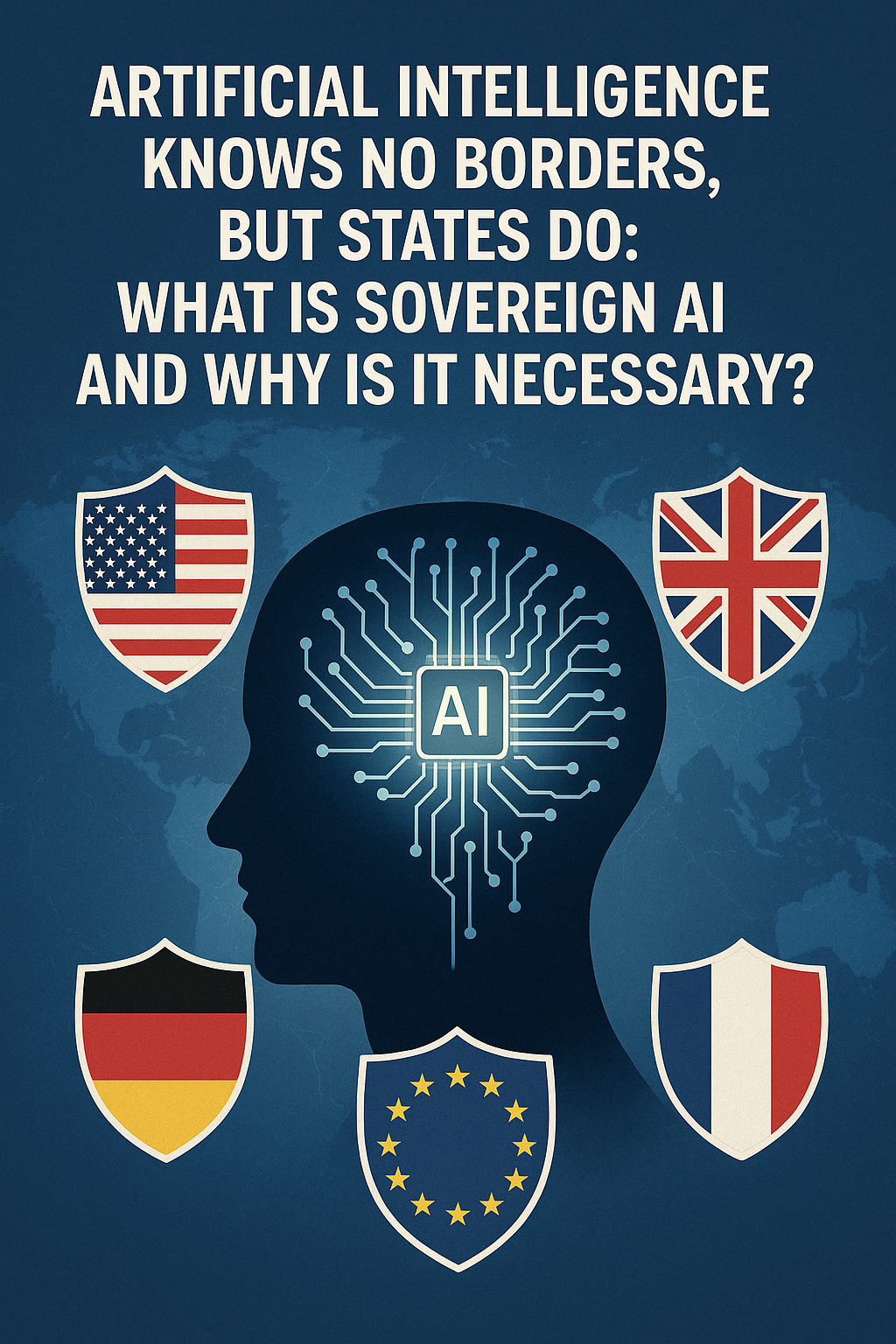
Sovereign AI refers to a nation's capacity to build and operate AI services, particularly large-scale generative AI, entirely within its own geographical and legal jurisdiction. This strategy is an extension of technological sovereignty, aiming to ensure that a country's digital infrastructure—from the AI accelerators and graphics processing units (GPUs) to the large language models (LLMs) themselves—adheres to local laws and national interests.
The drive for sovereign AI is fueled by several key imperatives. First is the protection of data and privacy, as nations seek to prevent sensitive citizen and state data from being processed and stored abroad, in line with regulations like the EU's GDPR. Second is the desire for cultural and linguistic relevance; by training models on local data and in native languages, countries can mitigate the inherent biases of dominant AI models, which are overwhelmingly trained on English-language and Western content. Finally, sovereign AI is a matter of national security and economic strategy. It fosters domestic high-tech industries, creates jobs, and ensures that a nation is not dependent on foreign powers for a technology that is becoming fundamental to economic competitiveness and defense.
This quest is manifesting in colossal infrastructure projects. A prime example is **Project Stargate**, a joint venture involving OpenAI, SoftBank, and Oracle. Initially conceived as a $100 billion supercomputer, it has expanded into a $500 billion global infrastructure initiative to build massive, world-scale AI data centers. While its initial focus is a 10-gigawatt buildout in the United States to secure American leadership, its strategy explicitly includes an international dimension. Through its "OpenAI for Countries" program, Stargate is partnering with allied nations—including the UAE, Norway, the United Kingdom, and Argentina—to establish "data-sovereign clouds." These international campuses, often powered by local renewable energy, replicate Stargate's capabilities, allowing partner nations to develop their own AI ecosystems while remaining aligned with a Western technology stack.
### The Unseen Engine: AI's Thirst for Critical Minerals
The gleaming data centers and powerful AI models of the digital age are built upon a foundation of humble, finite natural resources. The AI industry's explosive growth has ignited an unprecedented demand for a specific suite of critical minerals, creating the physical bottleneck in the race for AI supremacy. Without a secure supply of these materials, the construction of AI factories and the production of advanced chips would grind to a halt.
The demand is multifaceted, touching every part of the AI hardware stack:
* **Advanced AI Chips:** The high-performance semiconductors that are the brains of AI systems rely on minerals with properties superior to silicon for high-frequency and high-power applications. **Gallium** and **germanium** are crucial for producing these faster, more energy-efficient chips. AI-specific demand is projected to increase the need for germanium by 37% and gallium by 85% by 2033. * **Data Center Infrastructure:** AI data centers are voracious consumers of power and require vast networks of wiring and cooling systems. **Copper** is the indispensable metal for power transmission and thermal management. The International Energy Agency (IEA) projects that the data center buildout could boost global copper demand by 2% by 2030 and contribute to a global shortfall by 2035. * **Cooling and Power Systems:** The immense heat generated by thousands of GPUs operating in close proximity requires sophisticated cooling systems. These systems use heat sinks made of **aluminum** and copper, as well as fans and pumps whose motors contain powerful magnets made from **Rare Earth Elements (REEs)** like neodymium.
This thirst for minerals means that the future of AI is directly tied to the mining, processing, and refining of these core elements. A delay in mineral supply can translate directly into a delay in deploying the next generation of AI.
### The Dragon's Hoard: China's Grip on the Mineral Supply Chain
The primary challenge for nations pursuing sovereign AI is that the global supply chain for critical minerals is overwhelmingly dominated by a single country: China. For decades, Beijing has strategically invested in and consolidated its control over the mining and, more importantly, the processing of these essential materials. This has given it a powerful lever of geopolitical influence and created a profound vulnerability for the rest of the world.
The statistics paint a stark picture of this dominance. China controls: * 98% of the world's primary **gallium** production. * Over 60% of global **germanium** refining. * Approximately 90% of **Rare Earth Element (REE)** processing.
This concentration of power is not theoretical. China has demonstrated its willingness to use this dominance as a geopolitical tool. In July 2023, it imposed export controls on gallium and germanium, sending shockwaves through the semiconductor industry. In October 2025, it announced further restrictions on REEs and related technologies. While diplomatic engagement led to a temporary "tactical pause" on some of these measures in late 2025, the underlying export control architecture remains firmly in place. Crucially, restrictions on certain heavy rare earths vital for defense applications and a categorical ban on exports of dual-use items to U.S. military end-users were not suspended. This strategic tightening and loosening of supply serves as a constant reminder to the world of where the balance of power in the resource-for-AI economy currently lies.
### Countermoves and Coalitions: Forging New Alliances
In response to this strategic vulnerability, the United States and its allies are mounting a coordinated effort to de-risk their supply chains and build a resilient alternative to Chinese dominance. This involves a flurry of diplomatic, financial, and industrial policy initiatives aimed at diversifying sources of critical minerals, from mining and processing to recycling and stockpiling.
At the forefront of this effort are new international partnerships. The U.S., European Union, and Japan have announced action plans to coordinate trade policies and create a "preferential trade zone" for critical minerals among allied nations. This is being supported by broader coalitions like the **Forum on Resource Geostrategic Engagement (FORGE)**, a successor to the Minerals Security Partnership that brings together dozens of countries to collaborate on policy and finance projects. Another key initiative is **Pax Silica**, a U.S.-led effort with partners including Japan, the UK, and South Korea, specifically aimed at securing AI-related supply chains.
These diplomatic frameworks are backed by substantial financial commitments. The U.S. government has mobilized over $30 billion to support strategic mineral projects. This includes **Project Vault**, a $10 billion program led by the Export-Import Bank of the United States to establish a domestic strategic reserve of critical minerals. Paradoxically, AI itself is being enlisted as part of the solution. Government agencies like DARPA are funding programs that use machine learning to accelerate the discovery of new mineral deposits and optimize extraction processes, hoping to use the technology to solve its own supply crisis.
### Conclusion: Navigating the AI-Resource Frontier
The pursuit of artificial intelligence has converged with the age-old geopolitics of natural resources. The ambition of sovereign AI—to achieve national self-sufficiency in this transformative technology—is fundamentally constrained by the global distribution of the minerals required to build it. Nations are now facing a dual challenge: they must innovate at a blistering pace to develop cutting-edge AI models while simultaneously engaging in the slow, capital-intensive work of building entirely new, secure, and resilient supply chains for raw materials.
The stakes could not be higher, encompassing economic competitiveness, national security, and technological leadership for decades to come. The path forward is not a single track but a multi-lane highway requiring strategic alliances, massive long-term investments in mining and refining, and technological breakthroughs in recycling and material science. The race for AI supremacy will not be won by the nation with the best algorithms alone, but by those who can successfully master the complex, contested frontier where digital ambition meets physical reality.